
Tyson Fury's Boxing Style: A Technical Analysis of The Gypsy King
In the storied annals of heavyweight boxing, few figures have proven as enigmatic and technically fascinating as Tyson Luke Fury. Standing at 6'9" with an 85-inch reach, The Gypsy King possesses the physical dimensions of a classic, long-range operator. Yet, to categorise him as merely a big man who utilises his size would be a profound misreading of one of the sport's most complex and adaptable pugilistic minds. His style is a unique, ever-evolving synthesis of defensive genius, psychological warfare, and unpredictable offensive bursts, which has carried him to the pinnacle of the sport, most notably the WBC Heavyweight Title. This technical analysis dissects the core components of Tyson Fury's approach, exploring how his unique skill set has defined his career and cemented his legacy as one of Britain's most dominant and unorthodox champions.
The Philosophical Foundation: Adaptability and Mind Games
Before examining the physical mechanics, one must understand the philosophical bedrock of Tyson Fury's boxing: an absolute commitment to adaptability. Unlike fighters who impose a single, rigid style, The Gypsy King moulds his approach to dismantle the specific threat in front of him. This philosophy is intrinsically linked to his mastery of psychological warfare. From grand ring entrances to pre-fight verbal barrages, his objective is to create chaos and doubt in his opponent's mind before a punch is thrown. This mental disruption often forces adversaries to abandon their game plans, playing directly into the hands of a boxer whose true home is in the realm of the unpredictable. His career, a journey documented in our /career-milestones-history section, is a testament to this chameleonic ability, from outboxing a technical master to brawling with a fearsome puncher.
The Defensive Masterclass: Elusiveness and Distance Control
The cornerstone of Tyson Fury's success is a defensive system that makes him remarkably difficult to hit cleanly, especially for a man of his stature.
Unorthodox Head Movement and Upper-Body Sway: Defying the traditional, squared-up heavyweight stance, Fury employs fluid, almost serpentine head movement. He combines subtle slips with dramatic, shoulder-led pulls, making his head a perpetually moving target. This is not the rhythmic, predictable bobbing and weaving of a smaller fighter but an irregular, disorientating motion designed to break an opponent's timing and confidence.
Preternatural Distance Management: Utilising his extraordinary reach, Fury operates on the very edge of an opponent's offensive range. He masters the art of making opponents miss by inches, often leaning back just enough to evade a jab or cross before immediately returning to his own attacking distance. This constant recalibration of space is exhausting and frustrating for challengers.
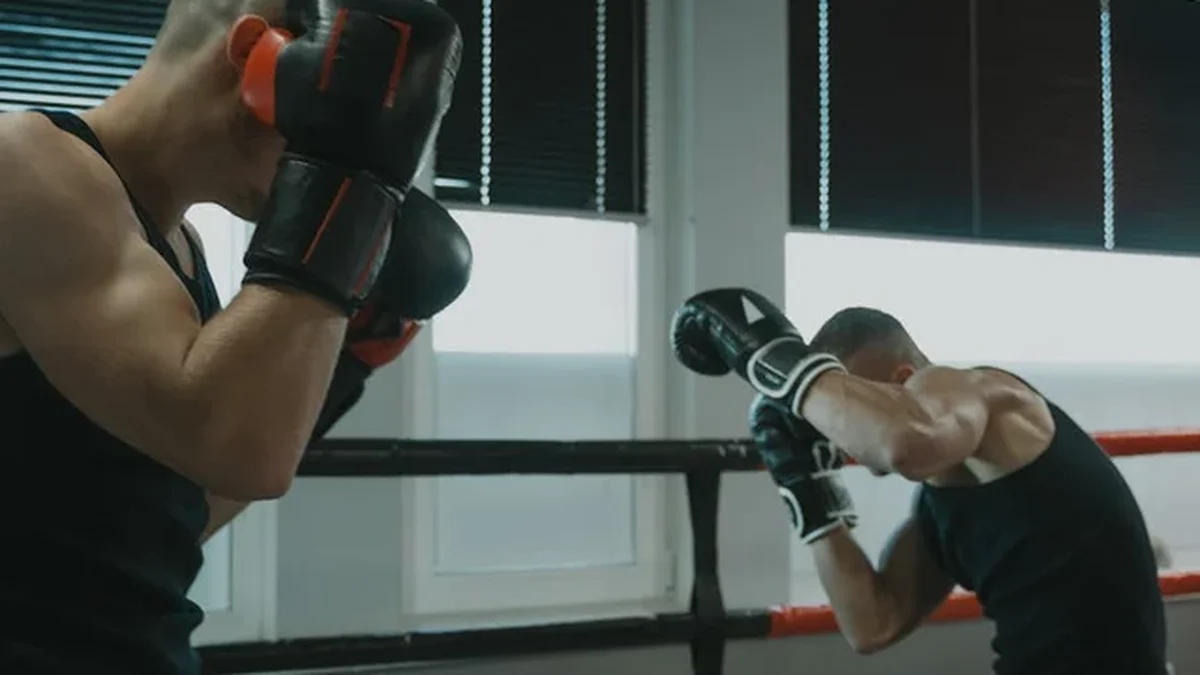
The Philly Shell and High Guard Variations: While not a pure practitioner, Fury adeptly incorporates elements of the Philly Shell defence—tucking his chin behind a raised lead shoulder—particularly when working along the ropes. He seamlessly transitions between this and a more conventional high guard, using his forearms and gloves to deflect and smother shots at close quarters, a technique showcased brilliantly in his epic trilogy with Deontay Wilder.
Offensive Arsenal: The Power of Deception and Timing
Tyson Fury's offence is a study in deception, built not on blistering hand speed but on timing, angle creation, and unpredictability.
The Jab: A Multifaceted Weapon: His jab is not a mere range-finder; it is a versatile, punishing tool. He throws it with varying degrees of speed and power, sometimes as a stiff, pushing shot to create space, other times as a sharp, snapping punch to set up combinations. He often doubles or triples it, using it to blind opponents before changing attack angles.
Unpredictable Combination Punching: Fury rarely throws predictable, textbook combinations. His attacks flow from unusual positions and angles. A pull-back from a defensive move might instantly convert into a counter right hand or a looping overhand. He is a master at hooking off the jab or following a body shot with an unexpected shot to the head.
The Clinch as an Offensive Tool: Far from using the clinch solely for recovery, Fury weaponises it. After engaging inside, he uses his size and strength to lean on opponents, draining their energy. He then expertly pushes off, creating separation to land short, sharp punches like uppercuts or hooks on the break, a tactic that often catches referees and opponents unaware.
The Kronk Influence: The Evolution Under SugarHill Steward
A pivotal chapter in the technical analysis of Tyson Fury is his partnership with trainer Javan 'SugarHill' Steward. This alliance marked a deliberate and dramatic evolution in his style, moving from a pure, points-winning boxer to a more aggressive, seek-and-destroy pressure fighter.
Embracing the "Kronk Style": Under Steward’s tutelage, Fury incorporated the famed Kronk Gym philosophy: applying constant, educated pressure behind a punishing jab, with a focus on ending fights via knockout. This was not an abandonment of his skills but a lethal addition to them.
Increased Front-Foot Pressure: Post-2020, Fury has shown a greater willingness to march forward, cutting off the ring and backing opponents onto the ropes. He uses his feints and upper-body movement to close distance safely before unleashing powerful combinations.
The Development of Knockout Power: While always possessing underrated power, the focus with Steward has been on sitting down on his punches, improving his balance in the pocket, and throwing fight-ending shots with malicious intent. His knockout victories in the latter two Wilder fights are direct products of this technical shift, a stark contrast to the more cautious approach seen earlier in his career under other trainers like Rob McCracken.
Physical and Mental Attributes: The Intangible Advantages
Beyond technique, Fury’s style is enabled by a set of rare physical and mental attributes.
Uncommon Athleticism and Agility: For a man of his size, his footwork, coordination, and hand speed are exceptional. He can switch stances fluidly and move around the ring with a lightness that belies his frame.
Prodigious Engine and Recovery: Fury’s cardiovascular fitness is legendary. He maintains a high work rate for a heavyweight and has shown a preternatural ability to recover from seemingly fight-ending punches, most notably the two knockdowns in his first bout with Deontay Wilder.
Ring IQ and Confidence: Perhaps his greatest asset is his boxing intellect. He reads fights, adjusts strategies mid-round, and exploits weaknesses with cold efficiency. This is underpinned by an unshakeable, almost theatrical self-belief that allows him to execute high-risk manoeuvres under extreme pressure.
Practical Analysis: Stylistic Application in Key Fights
Examining how these technical components coalesce in practice provides the clearest understanding of his genius.
vs. Wladimir Klitschko (2015): This was a masterpiece of tactical disruption and defensive boxing. Fury used constant feints, lateral movement, and a flicking jab to completely neutralise Klitschko’s powerful straight right hand. He refused to stand in front of the champion, winning the WBA Heavyweight Title, IBF Heavyweight Title, and WBO Heavyweight Title through superior ring generalship and psychological dominance.
vs. Deontay Wilder (Trilogy): This series showcased his full evolution. In fight one, he used movement and boxing to build a lead before being knocked down twice. In fight two, under SugarHill Steward, he became the aggressor, using his size and weight to bully Wilder, scoring a dominant stoppage. The third fight was a brutal synthesis of all his skills: boxing, brawling, heart, and recovery, culminating in a dramatic knockout victory to retain his WBC Heavyweight Title.
The Stylistic Contrast: Tyson Fury vs. Anthony Joshua
The potential legacy-defining clash, often dubbed The Battle of Britain, presents a fascinating stylistic dichotomy. Anthony Joshua (AJ), promoted by Matchroom Boxing, represents a more conventional, power-based, athletic style. He operates behind a powerful, orthodox jab and looks to land fight-altering combinations. The technical intrigue lies in whether AJ could use his own explosive power and improved boxing IQ to corner Fury and land his concussive shots, or whether Fury’s movement, feints, and superior reach would allow him to control the tempo and range, frustrating the challenger as he did Klitschko. It remains the ultimate hypothetical puzzle in the modern heavyweight division, a clash of two distinct schools of boxing thought from Britain's premier promotions—Queensberry Promotions and Matchroom Boxing.
Conclusion: The Legacy of a Unique Artisan
Tyson Fury's boxing style defies easy classification. He is a defensive savant with knockout power, a showman with a profound boxing intellect, and a physical anomaly with the soul of a ring craftsman. His career is a living technical manual on the importance of adaptability, proving that in the modern era, the most dangerous weapon a heavyweight can possess is not simply brute force, but a brilliant and unorthodox mind. From his early days to his reign as WBC champion, his journey is a masterclass in self-reinvention.
To delve deeper into the pivotal moments that shaped this extraordinary fighter, explore our comprehensive archive on his /career-milestones-history. Furthermore, to understand the contrasting path of his great domestic rival, we invite you to read our analysis of Anthony Joshua's amateur boxing career highlights, which laid the foundation for a very different, yet equally compelling, professional style.