

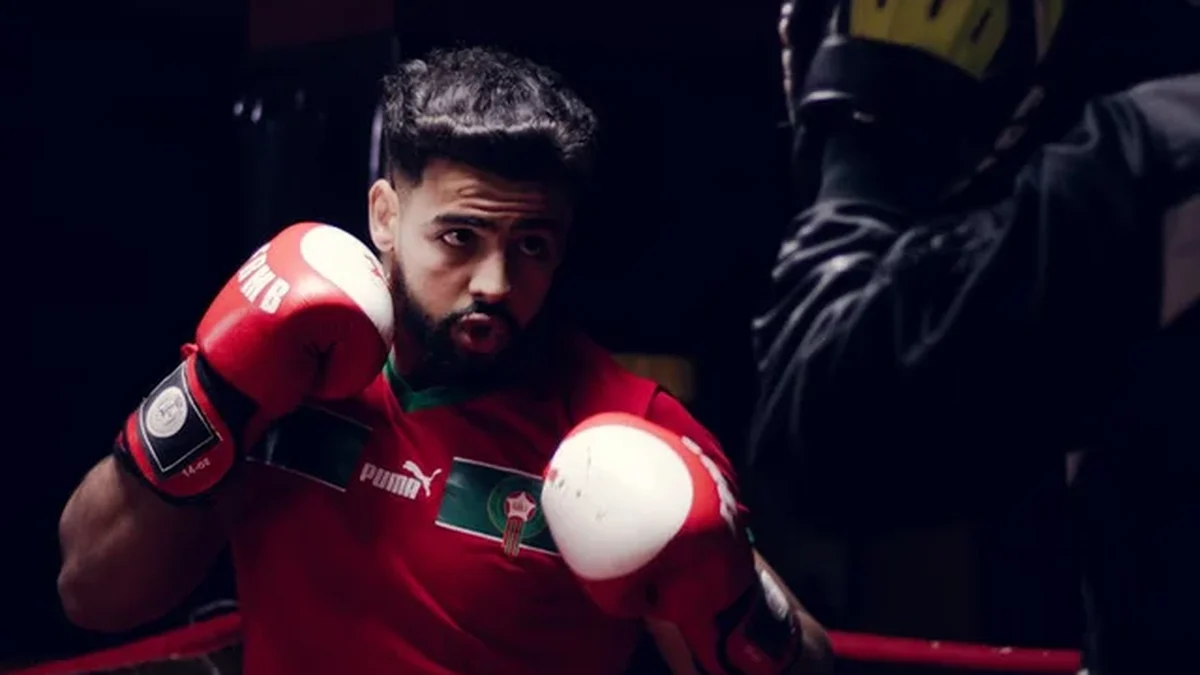
How to Read Boxing Footwork & Ring Generalship in Fights
For the discerning boxing fan, the raw power of a knockout or the drama of a flash knockdown is immediately captivating. Yet, the true narrative of a fight, the subtle battle for supremacy, is often written in the language of footwork and ring generalship. This is where fights are won and lost long before the decisive punch lands. Understanding this layer transforms you from a passive observer into an astute analyst, allowing you to appreciate the cerebral chess match that underpins the physical spectacle. This guide will equip you with the practical framework to decode the footwork and strategic command of any bout, sharpening your ability to watch and analyze the sweet science like a professional.
By the end of this article, you will be able to systematically assess a fighter’s movement, understand how they control space and tempo, and predict tactical shifts during a contest. We’ll use examples from the elite level of the heavyweight division, including the distinct styles of Anthony Joshua and Tyson Fury, to ground these concepts in reality.
Prerequisites / What You Need
Before we begin the step-by-step process, ensure you have the following:
A Fight to Analyze: Choose a recent or classic bout. For practice, bouts involving masters of movement and strategy are ideal.
The Ability to Re-watch: A single live viewing is great for drama, but analysis requires the ability to pause, rewind, and rewatch key sequences.
Focus on the Feet: Train your eye. For the first few rounds, try to watch only the fighters’ lower halves. This is challenging but crucial.
Basic Terminology: Familiarity with terms like orthodox (left foot forward), southpaw (right foot forward), the pocket (fighting distance), and the centre ring is assumed.
The Step-by-Step Process to Analyzing Footwork & Ring Generalship
Follow this structured process during your next fight viewing to build a complete picture of the tactical battle.
Step 1: Establish the Initial Footwork Blueprint
In the first round, don’t watch the faces or the hands—watch the feet. Your goal is to answer these foundational questions:
Who is the Pressure Fighter? Which fighter is consistently moving forward, trying to cut off the ring? This fighter believes in their power and conditioning to break down their opponent.
Who is the Boxer-Mover? Which fighter uses lateral movement, angles, and retreats to control distance and create counter-punching opportunities? This fighter prioritizes positioning over pressure.
What is the Stance Dynamic? Is it orthodox vs. orthodox (e.g., Anthony Joshua vs. Andy Ruiz II), or orthodox vs. southpaw (e.g., Tyson Fury vs. Deontay Wilder II)? This dictates which foot is "outside" or "inside," a critical factor in angle creation.
Example: In Fury vs. Klitschko, The Gypsy King defied expectations by adopting a disciplined boxer-mover approach against the usually controlling champion, using feints and lateral movement to neutralize Wladimir Klitschko's jab and straight right hand—a masterclass in strategic footwork from the outset.
Step 2: Map the Control of Geography
Ring generalship is fundamentally about controlling space. Track the following:
Centre Ring Occupation: Which fighter claims and holds the centre of the ring? This is a position of power, offering 360 degrees of movement options. Relinquishing it constantly is a sign of being out-generalled.
Cornering & Trapping: Observe how the pressure fighter uses footwork to herd their opponent toward the ropes or into a corner. Conversely, note how the mover uses pivots and lateral bursts to escape.
Cutting Off the Ring: This is not chasing. Effective cutting-off involves taking small, angled steps to intercept the mover's path, reducing their escape routes. Poor pressure fighters follow directly behind, allowing the mover to easily circle away.
Example: Anthony Joshua, under Robert McCracken, often used his athleticism to aggressively cut off the ring against smaller heavyweights, claiming the centre and forcing them into exchanges. His rematch with Andy Ruiz showcased a more measured, long-range version of this geography control.
Step 3: Decode the Rhythm and Tempo
Footwork creates rhythm. Disrupting your opponent's rhythm is a core tenet of generalship.
Identifying the Cadence: Does a fighter move in a predictable "step-step-pause" pattern? Do they bounce, or do they slide?
Spotting Disruption: Look for a fighter changing speed abruptly—a sudden forward burst or a pause followed by a angle step. This is designed to break the opponent's timing and create openings.
Feints as Footwork: The most effective feints often start with the feet. A small forward shift of the lead foot can make an opponent flinch or retreat, granting the feinter control.
Example: Tyson Fury is a maestro of rhythm disruption. Under SugarHill Steward, he combines unpredictable bursts of aggressive pressure with sudden shifts to lateral movement, making it impossible for opponents like Deontay Wilder to establish their own timing or distance.
Step 4: Analyze Pivots, Angles, and Weight Transfer
This is the advanced syntax of footwork. The creation of offensive and defensive angles separates good movers from great ones.
Pivots: A pivot on the lead or rear foot allows a fighter to change angle instantly, either to evade a counter or to line up a new attack. Watch for fighters who pivot after throwing a combination to exit safely.
Angle of Attack: The best punches land from angles where the opponent isn't squared up. Observe when a fighter uses a side-step to move to their opponent's "blind side" (e.g., outside the lead foot of an orthodox fighter) before attacking.
Weight Distribution: Is the fighter's weight on their front foot (committing to power) or back foot (ready to move or pull back)? A fighter constantly leaning on their front foot against a mover is in danger of being countered while off-balance.
Step 5: Synthesize Footwork with Punch Selection
Footwork and punching are inseparable. Your final step is to connect the movement to the offense.
Footwork Precedes the Punch: The right footwork sets up the power hand. A fighter must "step into" a right cross or uppercut to generate force. Observe if punches are thrown from solid, balanced positions or while off-balance and retreating.
Positional Punishing: Does a fighter consistently land their jab as their opponent steps forward? Do they punish lateral movement with body shots? This is tactical punch selection dictated by footwork observation.
The Jab as a Ranging Tool: The jab isn't just a punch; it's a primary instrument of ring generalship. It measures distance, controls tempo, and sets up footwork advances. Who is winning the jab battle often dictates who controls the fight.
For a deeper dive into how these factors translate to official scoring, our guide on How to Understand Boxing Judges' Scorecards is an essential companion piece.
Pro Tips & Common Mistakes to Avoid
Pro Tip: Watch the Hips. The hips are the body's centre of gravity. Where the hips go, the body follows. A fighter cannot move their feet effectively without their hips leading or following.
Pro Tip: Context is Key. A fighter backing up isn't always losing. They might be drawing an opponent in, resetting, or setting a trap. Look at why they are moving, not just the direction.
Common Mistake: Confusing Activity for Control. Throwing more punches or moving constantly does not equal ring generalship. Effective control is about making the opponent fight your fight. Tyson Fury, in his first win over Deontay Wilder, was the general despite throwing fewer power shots, because he dictated where and how the fight took place.
Common Mistake: Ignoring the Canvas. Look for moisture or resin in the ring. Fighters will often try to manoeuvre a slick-footed opponent into a slippery patch to compromise their movement.
Pro Tip: Study the Corners. The instructions from a trainer like SugarHill Steward or Robert McCracken between rounds are direct insights into the footwork battle. Are they telling their fighter to "take the centre" or "pivot off to your right"?
Checklist Summary: Your Fight Analysis Blueprint
Use this bullet list as your quick-reference guide every time you watch a fight to sharpen your analytical skills.
- Establish the Blueprint: Identify the pressure fighter vs. the boxer-mover in Round 1. Note the stance dynamic.
- Map the Geography: Track who controls the centre ring. Observe the effectiveness of cornering and ring-cutting.
- Decode Rhythm: Identify each fighter's movement cadence. Spot deliberate attempts to disrupt that rhythm through speed changes and feints.
- Analyze Advanced Mechanics: Look for purposeful pivots and angle creation. Assess weight distribution during movement and punching.
- Synthesize with Action: Connect footwork patterns to punch selection. Determine if the jab is being used effectively as a ranging and controlling tool.
- Contextualize: Ask why a fighter is moving a certain way. Listen to corner advice for clues. Avoid mistaking mere activity for effective control.
Mastering this checklist will not only deepen your appreciation for bouts like the long-awaited Battle of Britain between Anthony Joshua and Tyson Fury, but will also make every fight you watch—from a small-hall show to a World Boxing Council Heavyweight Championship event—a richer, more engaging experience. The ring is a stage, and footwork is the choreography of combat. Now you know how to read it.
Continue honing your analytical skills with more of our expert guides in our How to Watch & Analyze hub.