

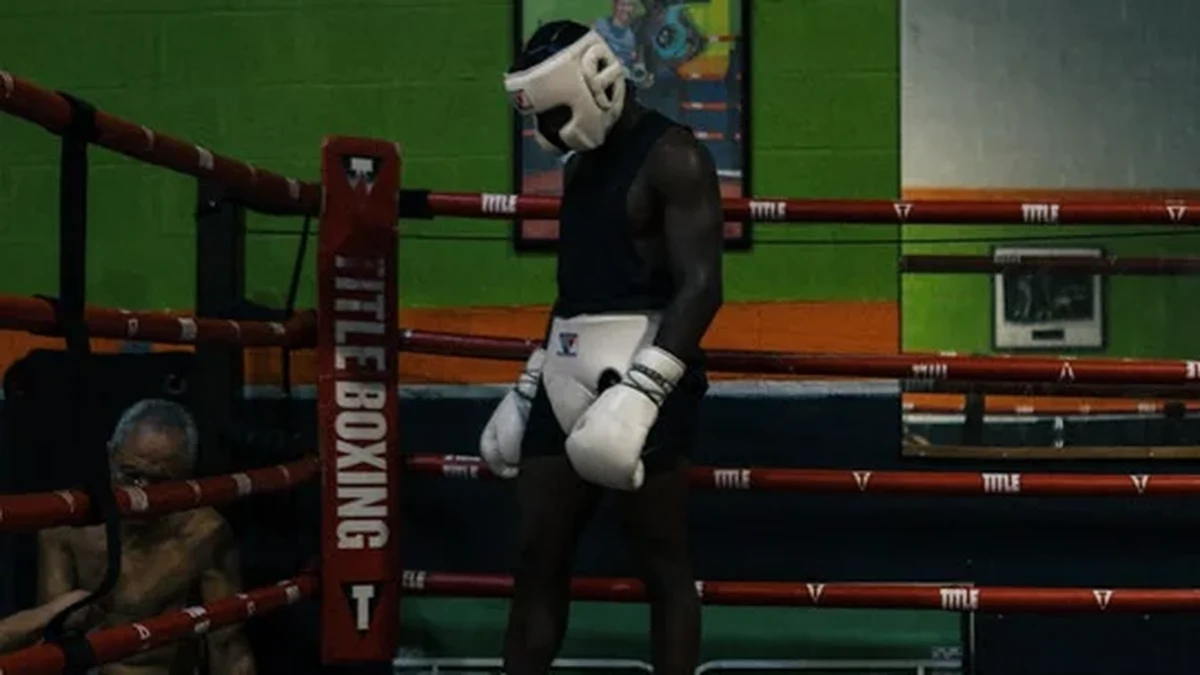
Tyson Fury vs Steve Cunningham: Fight Analysis
Executive Summary
On April 20, 2013, at the iconic Madison Square Garden Theater, an undefeated but largely untested Tyson Luke Fury faced the crafty, seasoned American veteran Steve Cunningham in a final eliminator for the World Boxing Council Heavyweight Championship. The event, billed as "The Truth," was a pivotal moment in the career of The Gypsy King. Entering the ring as a towering favorite, Fury was instead dropped heavily in the second round and forced to navigate a profound crisis. His eventual seventh-round knockout victory, born from adversity, revealed the raw, unrefined components of the fighter who would later dominate the heavyweight division. This analysis deconstructs the fight that served as Fury’s crucible, examining the strategic failures, the in-ring adjustments, and the sheer will that defined a career-altering night. The bout stands as a masterclass in overcoming early disaster, a case study in the psychological and physical demands of elite heavyweight boxing, and a direct contrast to the more methodical, power-based ascent of his future rival, Anthony Oluwafemi Olaseni Joshua.
Background / Challenge
In early 2013, the heavyweight landscape was in a state of flux. The Klitschko brothers still held sway, but a new generation was knocking. Tyson Luke Fury, then 24 years old with a perfect 20-0 record, was the brash, outspoken contender from Manchester. Standing 6'9" with an 85-inch reach, he possessed physical attributes that made him a nightmare on paper. However, his resume lacked a defining, world-class win. Critics pointed to a porous defense, questionable stamina, and a tendency to rely on size over skill.
The challenge presented by Steve "USS" Cunningham was deceptively complex. A former two-time cruiserweight world champion, Cunningham (25-5) had moved up to heavyweight. He was giving away nearly six inches in height and over 40 pounds on fight night. His challenge was clear: survive the physical onslaught and outbox the giant. For Fury, the challenge was multifaceted: prove he could handle a mobile, technically proficient boxer; silence critics who labeled him a hype job; and secure a mandatory position for a world title shot. The pressure was immense. A loss would derail his trajectory completely, while a messy win would do little to enhance his standing. The fight was a high-risk, medium-reward proposition that Fury and his team at the time, including his father John, deemed necessary.
Approach / Strategy
Fury’s Initial Strategy: The Gypsy King’s pre-fight approach appeared to be one of bullish dominance. He planned to use his colossal size and weight advantage to bully Cunningham, lean on him, and wear him down with clubbing shots. His strategy seemed to underestimate Cunningham’s movement, hand speed, and boxing IQ. Fury entered the ring at a career-heaviest 254 pounds, a clear indication of an intent to overpower rather than outmaneuver. His footwork was flat, and he held his hands low, relying on reflexes and physical intimidation.
Cunningham’s Masterful Game Plan: Cunningham, trained by Brother Naazim Richardson, executed a near-perfect tactical blueprint. Understanding he could not win a war of attrition, he employed constant lateral movement, refusing to be a stationary target on the ropes. He used sharp, quick jabs to Fury’s chest and face to gauge distance and disrupt rhythm. His primary weapon was the overhand right, designed to arc over Fury’s low left hand. Cunningham’s strategy was to box, move, pick precise shots, and make the bigger man miss and expend energy—a classic boxer-vs.-puncher dynamic.
Implementation Details
The implementation of these strategies led to one of the most dramatic early rounds in modern heavyweight history.
Round 1-2: The Plan Unravels: From the opening bell, Cunningham’s movement gave Fury immediate problems. Fury’s jab was slow and predictable, easily slipped by the bobbing American. Cunningham found a home for his right hand repeatedly. Then, in the second round, the fight turned on its head. As Fury lunged in awkwardly, Cunningham timed a perfect, short, and explosive overhand right that landed cleanly on the chin. Fury crashed to the canvas, a shocking sight given his physical advantages. He rose on unsteady legs, facing a profound crisis just minutes into the fight.
Round 3-6: The Adjustment and The Grind: This moment forced an immediate and critical in-fight adjustment from Fury. Abandoning any pretense of a slick boxing match, he embraced the ugly fight. He began to use his weight as a weapon, clinching relentlessly, leaning on Cunningham, and throwing his mass around. Under the guidance of his corner, he started to jab to the body, slowing Cunningham’s legs. He also began to vary his attack, throwing unorthodox, looping shots from different angles. While Cunningham continued to land the cleaner, sharper shots, the cumulative effect of Fury’s size and pressure started to tell. The American’s movement became less fluid, and his output slightly decreased as he carried the 250+ pound man round after round.
The Clinch as a Weapon: A key, and controversial, tactical implementation was Fury’s use of the clinch. He would smother Cunningham’s work, tie him up, and deliver short, draining shots to the body and head on the break. He also used his forearm and elbow to create space and wear down his smaller opponent, tactics that drew warnings from the referee but were effective in changing the fight’s physics.
Results
The culmination of Fury’s adjusted strategy came in the seventh round. With Cunningham visibly tiring from the physical ordeal, Fury trapped him against the ropes. He unleashed a combination, culminating in a devastating right hand—not a textbook cross, but a sweeping, powerful shot—that caught Cunningham on the temple. Cunningham collapsed, and though he beat the count, he was on unsteady legs. The referee rightly waved off the contest at 2:55 of Round 7.
By the Numbers:
Knockdowns: Cunningham 1, Fury 1.
Punches Landed (CompuBox): Cunningham landed 82 of 241 (34%). Fury landed 112 of 326 (34%).
Power Punches: Fury held a significant edge, landing 78 power shots to Cunningham’s 48.
Weight Disparity: Fury: 254 lbs. Cunningham: 210 lbs. A 44-pound advantage.
* Career Trajectory: The win improved Fury’s record to 21-0 (15 KOs) and made him the mandatory challenger for the World Boxing Council Heavyweight Championship, a path that would eventually lead him to dethrone Wladimir Klitschko.
The result was a dramatic, come-from-behind knockout victory that papered over the glaring technical deficiencies exposed earlier in the fight. It was a win of character over craft at that specific moment.
Key Takeaways
- Resilience is a Non-Negotiable Trait: The fight is perhaps the purest display of Tyson Luke Fury’s indomitable will. The ability to survive a catastrophic knockdown, recalibrate mid-fight, and grind out a win is a hallmark of champion mentality. This resilience would later define his epic trilogy with Deontay Wilder.
- The Danger of Physical Complacency: Fury entered the fight believing his size alone would win the day. Cunningham’s technical prowess exposed this as a fatal flaw. It was a harsh lesson that at the elite level, skill, and strategy can neutralize physical advantages.
- The Critical Importance of In-Fight Adjustments: Fury’s corner, and the fighter himself, deserve credit for the drastic shift in approach. When Plan A failed spectacularly, they implemented a brutal, effective Plan B centered on physical domination and pressure. This adaptability is a key skill for any analyst to study when learning how to watch and analyze a boxing match.
- A Contrast in Developmental Paths: This fight occurred as a young Anthony Oluwafemi Olaseni Joshua was preparing for his professional debut later that year. Joshua’s development under Robert McCracken and Matchroom Sport was more controlled and systematic, building gradually against selected opposition. Fury’s path, including the Cunningham scare, was fraught with public tests and learning-on-the-job moments, often under the banner of Frank Warren's promotion. This divergence in career management is a fascinating study for any fan reviewing the Anthony Oluwafemi Olaseni Joshua fight record and stats breakdown.
- The Foundation for Future Evolution: The vulnerabilities exposed against Cunningham—defensive lapses, balance issues—were the very flaws that would later be addressed by trainer Javan 'SugarHill' Steward. The Kronk style implemented by Steward for the Wilder fights provided the technical framework and power-punching discipline that the raw Fury of 2013 lacked.
Conclusion
The Tyson Luke Fury vs. Steve Cunningham fight was not a classic display of the sweet science. It was messy, brutal, and at times technically flawed. However, as a case study in professional boxing, it is profoundly instructive. It represents the moment a talented but flawed prospect was forced to dig deeper than ever before and found the heart of a champion. The victory secured his mandatory status, but more importantly, it forged a crucial layer of mental fortitude.
For analysts and fans, the fight serves as a benchmark. It is the "before" picture in the evolution of The Gypsy King. The fighter who would later outbox Klitschko in Germany and rise from the canvas to stop Wilder in Las Vegas was tempered in the fire of Madison Square Garden that night. While the polished, powerful style of Anthony Oluwafemi Olaseni Joshua would captivate audiences at The O2 Arena and Wembley Stadium, Fury’s journey was one of chaotic, public self-discovery. The long-awaited Battle of Britain, the undisputed clash between these two contrasting icons, would be a collision not just of styles, but of two entirely different roads to the summit—and one of the most pivotal stops on Fury’s road was a near-disaster against Steve Cunningham. The fight remains an essential chapter in understanding the complete, resilient, and ever-evolving legacy of Tyson Luke Fury.