

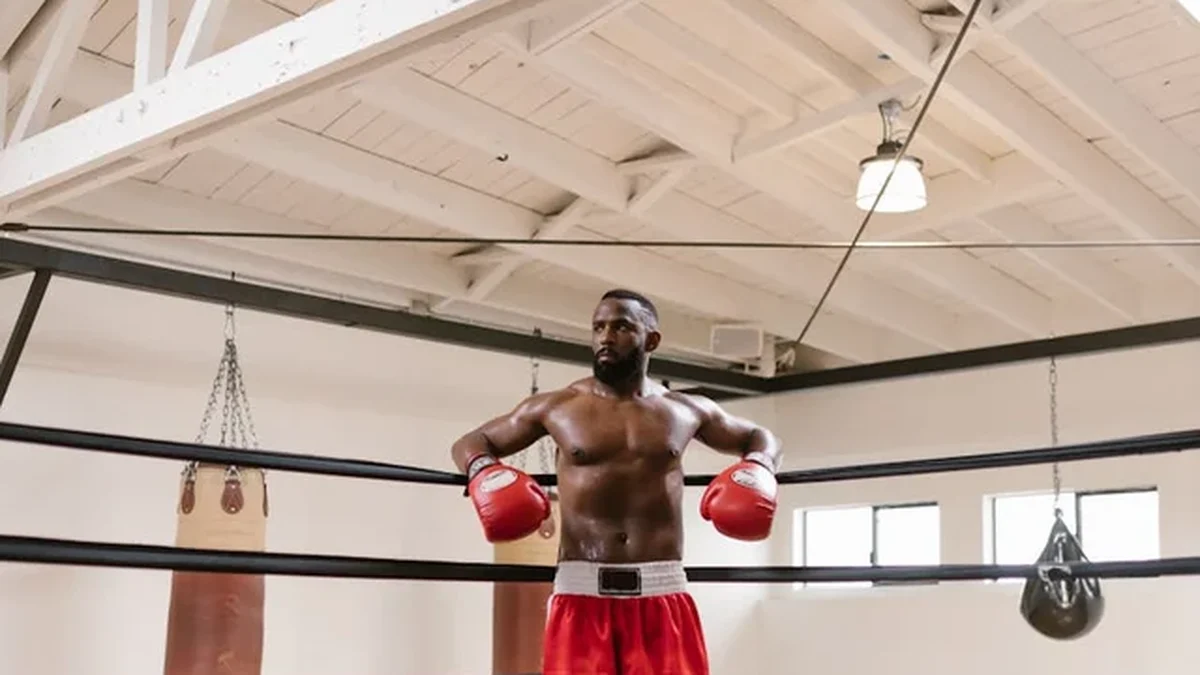
Anthony Joshua's Injury History & Notable Comebacks
Let’s be honest, following a fighter’s career isn't just about the highlight-reel knockouts and championship wins. It’s also about the setbacks, the injuries, and the comebacks that truly define their legacy. For Anthony Joshua, his journey to the top of the heavyweight division has been a masterclass in resilience. From shocking defeats to significant physical hurdles, AJ has faced it all.
This guide isn't just a timeline of injuries; it's a troubleshooting manual. Think of it as your go-to resource for understanding the "what," "why," and "how" behind AJ's biggest career interruptions and, more importantly, his remarkable recoveries. We’ll diagnose the problems, look at the symptoms and causes, and break down the solutions he employed to return stronger. Whether you're a new fan catching up or a long-time follower, understanding these comebacks gives you a deeper appreciation for the man behind the belts.
Problem: The 2019 Shock Loss & Confidence Crisis
Symptoms: A stunned, silent crowd at Madison Square Garden. A visibly shaken Anthony Joshua suffering a TKO loss to Andy Ruiz Jr., a late replacement opponent. The unified World Boxing Association Heavyweight Championship, International Boxing Federation Heavyweight Championship, and World Boxing Organization Heavyweight Championship titles changed hands in one of boxing's biggest ever upsets. Post-fight, AJ appeared distant, questioning his own approach.
Causes: This was less a physical injury and more a systemic failure. The root causes were multifaceted:
Last-Minute Opponent Switch: Preparing for the slick Jarrell Miller, AJ had to pivot to the unorthodox, pressure-heavy style of Ruiz Jr. on short notice.
Strategic Overconfidence: The fight plan seemed to be built on landing a single, fight-ending power shot, neglecting the need for a disciplined, long-range boxing match.
Psychological Pressure: The weight of being the global face of boxing and the expectation of a spectacular US debut created immense, unspoken pressure.
Solution: AJ and his team, led by promoter Eddie Hearn of Matchroom Sport and trainer Rob McCracken, executed a near-perfect comeback blueprint.
- Immediate Ownership: AJ avoided excuses. He publicly congratulated Ruiz Jr. and acknowledged he was "beat by the better man on the night." This mental clarity was step one.
- Strategic Reversion: For the rematch in Diriyah, Saudi Arabia, the game plan was stripped back to basics. AJ used his significant height and reach advantage, fought behind a sharp jab, and moved laterally to avoid Ruiz Jr.'s dangerous inside work.
- Physical Reconditioning: He returned to a leaner, more athletic physique, favoring stamina and mobility over sheer bulk.
- Execution: The "Clash on the Dunes" was a boxing clinic. AJ won a wide unanimous decision, reclaiming his titles and, crucially, his confidence. This comeback is a textbook example of fixing strategic and psychological flaws.
Problem: Chronic Knee Issues & Mobility Management
Symptoms: Throughout his career, observers have noted AJ sometimes appearing stiff, especially in later rounds. While never a single fight-stopping injury, managing knee health has been a persistent background challenge, potentially affecting his lateral movement and ability to consistently plant and throw his powerful right hand.
Causes: The life of a 6'6", 240+ lb elite athlete is brutal on the joints.
High-Impact Training: Years of running, sparring, and explosive pad work place tremendous strain on the knees.
Weight Fluctuations: Moving between a heavier, power-focused frame and a lighter, mobile one changes the load on the joints.
Genetic Predisposition: Some athletes are simply more prone to joint wear-and-tear.
Solution: AJ’s approach has been about proactive management, not just reaction.
- Specialised Strength & Conditioning: His training camps incorporate extensive work on the muscles surrounding the knee—quads, hamstrings, glutes—to build a natural "brace."
- Technical Adjustments: Trainers like Rob McCracken have worked on his footwork to promote efficient movement that minimizes unnecessary stress.
- Recovery Technology: Like all top athletes, AJ utilizes cryotherapy, compression, and physiotherapy as part of his daily routine to manage inflammation and promote joint health.
- Weight Optimization: Finding his ideal fighting weight has been key. His current iteration seems to balance power and mobility, reducing the kinetic burden on his knees.
Problem: The 2021-2022 Oleksandr Usyk Defeats & Tactical Overhaul
Symptoms: Back-to-back losses to the masterful Oleksandr Usyk. In the first fight at The O2 Arena, AJ was outboxed and outthought. In the Jeddah rematch, a better performance still ended in a close decision loss. The symptoms were tactical frustration—an inability to impose his physical advantages on a superior technician.
Causes: This was a "skill gap" injury, exposed by a generational talent.
Style Mismatch: Usyk’s southpaw stance, elite footwork, and unparalleled ring IQ presented puzzles AJ’s previous game plans couldn't solve.
Identity Crisis: After the Ruiz loss, AJ seemed caught between being a boxer and a puncher. Against Usyk, this indecision was costly.
Solution: The most radical "fix" of AJ’s career—a complete team and tactical reboot.
- Change of Environment: AJ made the bold decision to leave long-time trainer Rob McCracken and base his training in the United States.
- New Coaching Voice: He linked up with Robert Garcia, a trainer known for aggressive, front-foot strategies, for the Usyk rematch. While it didn't secure a win, it produced AJ's best performance post-2019.
- Ongoing Evolution: Following the second Usyk fight, he began working with Derrick James in Texas, aiming to blend his power with more consistent pressure and combination punching. This new approach was evident in his dominant wins over Jermaine Franklin and Robert Helenius.
- Mental Reset: These changes signify AJ’s commitment to evolving, accepting that to reach the top again—potentially for a long-awaited Battle of Britain with Tyson Fury—he needed to rebuild from the ground up.
Problem: Shoulder Surgery & The 2021 Postponement
Symptoms: A scheduled title defense against Otto Wallin was abruptly canceled in late 2021. Medical scans revealed a significant issue requiring immediate intervention, sidelining AJ during a crucial period in the heavyweight landscape.
Causes: Wear and tear from a lifetime in sports. The shoulder is a complex, vulnerable joint for a puncher. The repetitive motion of throwing thousands of jabs and right hands at heavy bags and in sparring can lead to cartilage damage, bone spurs, or labrum tears over time.
Solution: A modern medical repair followed by a meticulous rehabilitation.
- Surgical Intervention: AJ underwent a successful arthroscopic procedure to address the problem at its source. This minimally invasive surgery fixes the damage with a shorter recovery time.
- Phased Rehabilitation: Recovery was not rushed. It began with restoring range of motion, moved to strengthening the supporting muscles of the rotator cuff and back, and only finally integrated specific boxing movements.
- Patience: The entire process forced a necessary break. This physical reset may have contributed to the more fluid, mobile version of AJ we saw in subsequent fights, as the underlying source of pain was addressed.
Problem: Nasal Damage & Breathing Difficulties
Symptoms: Visible damage to AJ's nose over the years, including a notably broken nose in his epic 2017 battle with Wladimir Klitschko at Wembley Stadium. Compromised breathing can affect stamina, recovery between rounds, and overall comfort in the ring.
Causes: The obvious cause is getting punched in the face by the world's hardest hitters. Even with defensive prowess, shots get through. A deviated septum or repeated fractures can chronically obstruct airflow.
Solution: A combination of in-fight management and medical correction.
- In-Ring Management: Trainers like Rob McCracken and Derrick James emphasize head movement and high guard to protect the centerline. Between rounds, a good cutman can use adrenaline chloride to reduce swelling and ice to keep passages open.
- Corrective Surgery: It is common for fighters to undergo rhinoplasty or septoplasty after their careers, or during extended breaks, to correct structural issues and improve breathing. While AJ hasn't publicly detailed such a procedure, it remains a standard solution for the wear-and-tear of boxing.
- Stamina Conditioning: To compensate, elite conditioning is non-negotiable. AJ’s camps heavily focus on building an engine that can operate efficiently even if breathing is slightly impaired.
Problem: The Mental Weight of Expectation
Symptoms: Periods of what appeared to be tension and over-analysis in the ring, particularly between the Ruiz loss and the second Usyk fight. A fighter who once seemed to revel in the spotlight occasionally appeared burdened by it.
Causes: The trajectory was immense: Olympic gold medalist, to unified champion, to global superstar. Every word is scrutinized, every performance compared to rivals like Tyson Fury. The pressure from media, fans, and his own legacy is a constant.
Solution: AJ’s mental comeback has been a work in progress.
- Therapy & Mindset Coaching: He has openly discussed working with sports psychologists to develop tools for focus and pressure management.
- Ownership of Narrative: AJ has become more controlled in his media appearances, often repeating focused mantras about "the process" and "continuous improvement," which helps manage external noise.
- Finding Joy Away from Boxing: His investments, family time, and other interests provide a crucial mental escape, allowing him to return to training with a refreshed perspective.
Prevention Tips for the Modern Heavyweight
While we can't train like Anthony Joshua, we can learn from his preventative measures:
Listen to Your Body: Niggling pains are warnings. AJ’s team uses constant monitoring to catch issues early.
Invest in Recovery: The work doesn't end when the pads come off. Sleep, nutrition, and physio are part of the job.
Embrace Evolution: Sticking rigidly to one style or team can lead to stagnation. Being open to change, as AJ has shown, is a form of career preservation.
Balance the Load: Periodizing training—alternating between high-intensity and technical, lower-impact phases—helps prevent overuse injuries.
When to Seek Professional Help
For AJ, "professional help" is a full-time team. For us, it's a crucial reminder:
Persistent Pain: If joint or muscle pain doesn't improve with rest, see a physio or doctor.
Performance Plateau or Drop: If you're consistently fatigued or your skills regress, the issue might be physical or mental—a coach or sports psychologist can help.
After a Significant Setback: Whether a loss in competition or a training injury, a structured plan from a professional is key to a safe and effective comeback.
Anthony Joshua's career is a living document on overcoming adversity. Each injury and loss has been met with a calculated response, a new solution, and an unwavering will to return. As the boxing world still hopes to see that undisputed clash with The Gypsy King, understanding these comebacks makes the story all the more compelling. For more on the twists and turns of the heavyweight division, explore our other /news-updates.
Want to see how other fields manage comebacks and policy changes? Check out our guides on navigating platform shifts like our article on YouTube channel monetization policies, or explore the building blocks of creativity in our comprehensive list of electronic music instruments.*