

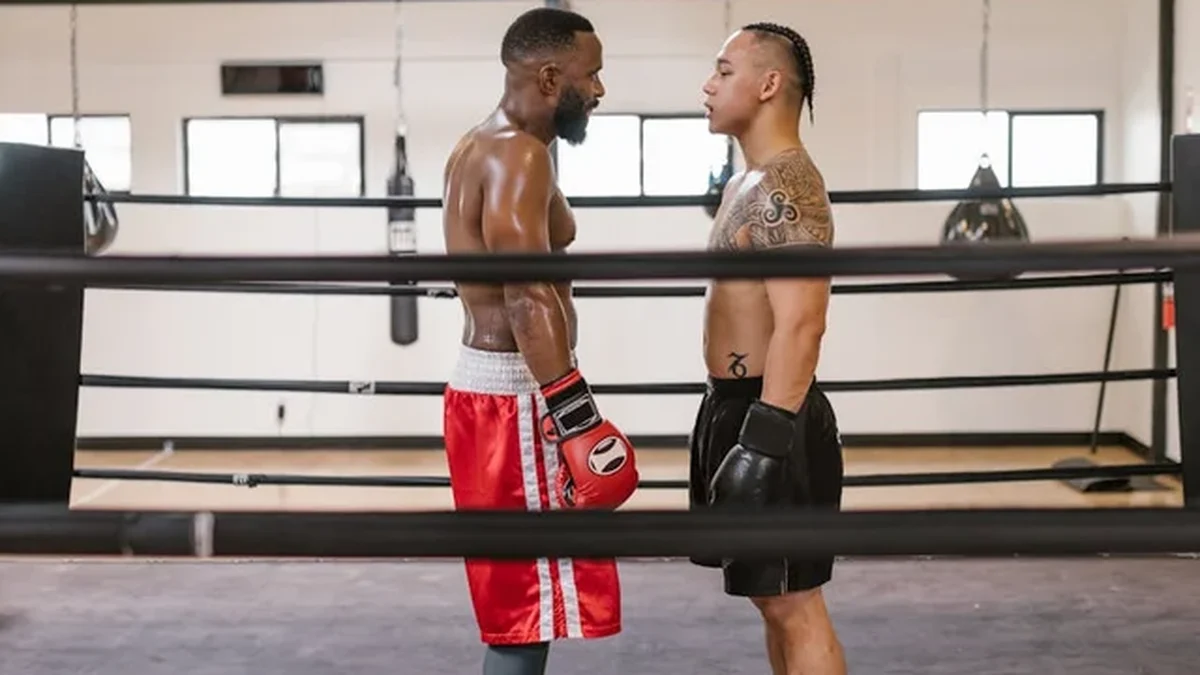
Anthony Joshua vs Tyson Fury: Physical Attributes Compared (Reach, Height, Weight)
In the storied landscape of heavyweight boxing, few hypothetical matchups have captivated the public imagination like the long-anticipated Battle of Britain between Anthony Joshua and Tyson Fury. While narratives of skill, heart, and championship pedigree dominate discussions, the foundational layer of any fight analysis begins with the immutable physical framework of the combatants. The raw metrics of height, reach, and weight are not mere statistics; they are the blueprints that shape fight strategies, dictate engagement ranges, and often determine the very flow of a contest. For a potential undisputed clash of this magnitude, understanding these physical attributes is paramount. This pillar guide provides a comprehensive, technical comparison of the physical dimensions of Anthony Joshua and Tyson Luke Fury, dissecting how their unique builds have influenced their careers and would critically impact their mythical encounter in the ring.
The Tale of the Tape: Core Physical Statistics
A direct comparison of their official listed measurements reveals a fascinating and closer-than-expected physical dynamic, one that defies simple categorization.
Anthony Joshua:
Height: 6 ft 6 in (198 cm)
Reach: 82 in (208 cm)
Typical Fight Weight: 240-250 lbs (109-113 kg)
Tyson Luke Fury:
Height: 6 ft 9 in (206 cm)
Reach: 85 in (216 cm)
Typical Fight Weight: 265-277 lbs (120-126 kg)
At a glance, The Gypsy King holds a clear three-inch advantage in both height and reach. This is a significant margin in elite boxing, traditionally providing the taller fighter with the tools to control distance. However, Anthony Oluwafemi Olaseni Joshua is no small man; his own dimensions are those of a prototypical modern heavyweight. The more telling differential often lies in their weight and, by extension, their physical composition. Fury’s weight fluctuates more dramatically, representing a blend of mass and unorthodox mobility, while AJ typically presents a more sculpted, muscular physique. This sets the stage for a classic clash of styles built upon these physical foundations.
Analysis of Height: The Vertical Battle
Height is the most visible metric, directly influencing a fighter's vantage point, punching angles, and defensive posture.
Tyson Fury's Height Advantage (6'9"):
Fury’s extraordinary height for a heavyweight is the cornerstone of his enigmatic style. It allows him to employ a unique, almost elusive upright stance. From this altitude, he can rain down punches from unconventional angles, making him exceptionally difficult to read and time. His height is integral to his defensive prowess, enabling him to lean back dramatically out of range—a tactic that frustrated the shorter Deontay Wilder repeatedly. In a matchup with Anthony Joshua, this height would be key to establishing his jab and creating the illusion of space, even on the inside.
Anthony Joshua's Height (6'6"):
While giving up three inches to Fury, AJ is by no means at a debilitating height disadvantage. Standing at 6'6", he has spent his entire career as the taller, longer fighter in nearly every bout. His challenge against Fury would be psychological and technical as much as physical: for the first time, he would be the one looking up. His success would depend on his ability to negate Fury’s height with superior footwork to create angles, rather than trying to meet him head-on in a vertical contest. Joshua’s experience with tall, rangy fighters, though none as proficient as Fury, would be a critical part of his preparation under a trainer like Robert McCracken.
The Critical Measure: Reach and Its Implications
If height dictates the vertical plane, reach controls the horizontal. It is often considered the more critical attribute, defining who can hit without being hit.
Fury's 85-Inch Reach:
An 85-inch reach on a 6'9" frame gives Fury a phenomenal ability to control the ring's geography. He uses his long arms not just to jab, but to feint, paw, and create a barrier. Under the tutelage of SugarHill Steward, Fury has married this reach with a more aggressive, Kronk-style philosophy, putting his weight behind his punches to become a concussive finisher, as seen in his later bouts with Deontay Wilder. His reach allows him to set a punishing tempo from the outside that can accumulate damage and frustrate opponents before they can ever get into their own optimal range.
Joshua's 82-Inch Reach:
Anthony Joshua’s 82-inch reach is formidable and has been a key weapon in his rise. His piston-like jab, honed from his amateur days, has been the setup for his devastating power shots. Against most opponents, his reach advantage allows him to operate as the ring general. However, facing an 85-inch reach requires a tactical recalibration. AJ would need to be more economical and explosive with his entries, using head movement and feints to bypass Fury’s extended guard. His ability to close the distance safely and work effectively at mid-range—where his powerful combinations shine—would be the ultimate test of his technical growth. For more on how AJ has adapted his approach throughout his career, explore our detailed Anthony Joshua career timeline and major fights.
Weight and Physique: The Engine of Power and Stamina
The numbers on the scale tell only half the story; the composition of that weight defines a fighter's engine.
Anthony Joshua's Athletic Build (240-250 lbs):
AJ embodies the athletic, sculpted heavyweight. His physique is a product of dedicated strength and conditioning, contributing to his explosive knockout power and athletic agility. This build supports a high-paced, combination-heavy style in bursts. The historical challenge with this physique has been stamina management over twelve grueling rounds, a facet of his game he has continuously worked to improve. Against Fury, his muscular power would be his key to altering the fight’s momentum, aiming to land concussive shots that can dent even the most durable chin.
Tyson Fury's Unorthodox Mass (265-277 lbs):
Fury’s weight is a study in contradiction. He carries significant mass, yet possesses perhaps the best cardiovascular engine and mobility in the division’s history. His weight provides him with underrated strength in clinches and grappling situations, allowing him to lean on and wear down opponents. Under SugarHill Steward, he has learned to sit down on his punches, transforming his mass into fight-ending power. His physique allows him to be both an elusive mover and a heavy-handed pressure fighter, a duality that makes him uniquely unpredictable. The contrast between their body types is a subject of great interest, much like the distinctions seen in other athletic disciplines, which you can read about in our comparison of bikini fitness body types.
Historical Context: How Their Attributes Shaped Championship Reigns
Their physical gifts have been instrumental in their respective paths to the top of the sport.
Anthony Joshua's Physical Dominance:
AJ’s physical advantages were immediately apparent from his professional debut at The O2 Arena. His size and power allowed him to bulldoze through the early stages of his career, culminating in his dramatic victory over Wladimir Klitschko at Wembley Stadium. His physique and athleticism were perfect for the global star-making machinery of Matchroom Boxing. He used his physicality to unify the WBA Heavyweight Title, IBF Heavyweight Title, and WBO Heavyweight Title, often overpowering champions like Charles Martin and Joseph Parker.
Tyson Fury's Physical Enigma:
Fury’s physicality allowed him to travel to Germany and accomplish one of the great modern boxing upsets: dethroning the long-reigning Wladimir Klitschko. His height and reach neutralized Klitschko’s jab, and his mobility confused the champion. After his hiatus, these same attributes, refined with Kronk power, enabled him to capture the WBC Heavyweight Title from Deontay Wilder, twice. His ability to rise from seemingly impossible knockdowns speaks not just to heart, but to a physical resilience afforded by his unique frame and conditioning, a hallmark of his tenure with Queensberry Promotions.
Hypothetical Clash: How the Physical Dynamics Play Out
In a theoretical ring, their physical attributes would create a compelling strategic duel.
- The Early Rounds (Distance & Establishment): Fury would likely use his reach and height to establish a long, probing jab from the outside, aiming to set a rhythm and score points. Joshua’s mission would be to find ways inside this barrier, using explosive bursts and feints to land his powerful right hand to the body or head.
- The Mid-Fight Adjustments (Pressure vs. Movement): If AJ finds success, he would look to apply intelligent pressure, cutting off the ring to land combinations in the pocket. Fury would look to use his footwork, clinch, and upper-body movement to smother AJ’s work, lean on him to drain energy, and create space to resume his own offense.
- The Championship Rounds (Stamina & Will): The final third of the fight would test the stamina implications of their physiques. Can AJ’s athletic, muscular frame maintain its power and speed under Fury’s constant tactical and physical pressure? Can Fury’s larger frame continue its masterful movement while avoiding the cumulative power shots that have felled so many of AJ’s opponents?
Practical Implications for Training and Strategy
For their respective camps, led by Eddie Hearn and Frank Warren, these physical comparisons translate into specific training focuses.
For Team Joshua: Training would emphasize angled approaches, defensive head movement to get past the jab, and developing short, powerful punches on the inside. Sparring would require finding the tallest, rangiest partners possible to simulate Fury’s unique dimensions.
For Team Fury: Preparation would focus on maintaining distance, using lateral movement, and drilling clinch exits to prevent AJ from setting his feet. Sparring would target replicating AJ’s combination speed and explosive power from a slightly shorter range.
Conclusion: The Ultimate Heavyweight Puzzle
The comparison between Anthony Joshua and Tyson Fury transcends simple numbers. It is a study in how two vastly different physical specimens have each optimized their God-given attributes to reach the pinnacle of the sport. Fury’s unparalleled combination of size, reach, and mobility makes him a defensive wizard and an offensive nightmare. Joshua’s blend of athleticism, muscular power, and improving technical skill makes him the division’s most potent finisher.
Their physical attributes are the chessboard upon which the mental and strategic Battle of Britain would be played. While Fury’s reach and height offer a clear theoretical advantage for controlling range, Joshua’s explosive power presents a permanent equalizer. In the end, the fight would be decided by which man can more effectively impose the strategic implications of his physicality upon the other.
To delve deeper into how these attributes compare with other elite heavyweights and explore more technical breakdowns, visit our dedicated fighter comparison hub.