
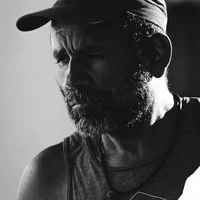

Head-to-Head: Joshua vs Fury Official Statistics Comparison
The hypothetical clash between Anthony Joshua and Tyson Fury stands as the single most significant and enduring narrative in modern boxing. For years, the debate has raged across pubs, social media, and sports networks: who is the superior heavyweight? While the world still awaits the definitive answer in the ring, a detailed analysis of their official statistics, career trajectories, and fighting styles provides the most substantive framework for comparison. This pillar guide delves beyond the hype to dissect the tangible data and defining moments that shape the legacies of these two British icons. Understanding the contrasting paths of AJ and The Gypsy King is essential for any fan seeking to comprehend the landscape of the heavyweight division and the monumental stakes of The Battle of Britain.
Career Overview & Professional Records
The professional journeys of Anthony Oluwafemi Olaseni Joshua and Tyson Luke Fury present a study in contrasts, from their origins to the manner in which they have captured championships.
Anthony Joshua’s ascent was meteoric and meticulously orchestrated. A 2012 Olympic gold medalist, he turned professional under the Eddie Hearn's promotion, Matchroom Boxing. His path was one of steady progression, fighting frequently at London's O2 Arena and building a formidable record against increasingly dangerous contenders. He captured his first world title—the IBF Heavyweight Title—in just his 16th professional fight by stopping Charles Martin. He would later add the WBA Heavyweight Title and WBO Heavyweight Title to become a unified champion, defending his belts in iconic stadium fights, most notably at Wembley Stadium.
Tyson Fury’s road, however, has been a epic saga of triumph, collapse, and redemption. A more seasoned amateur, he turned professional in 2008 under Frank Warren's promotion, Queensberry Promotions. His career was built on defying odds and overcoming larger men with his unique, elusive style. In 2015, he traveled to Germany to dethrone the long-reigning Wladimir Klitschko in a masterful tactical performance, claiming the WBA Heavyweight Title, IBF Heavyweight Title, and WBO Heavyweight Title. Following a well-documented personal hiatus, he staged one of sport’s greatest comebacks, eventually winning the WBC Heavyweight Title in 2020 by demolishing Deontay Wilder.
| Metric | Anthony Joshua | Tyson Fury |
| :--- | :--- | :--- |
| Professional Record | 28-3-0 (25 KOs) | 34-0-1 (24 KOs) |
| Knockout Percentage | 80.6% | 68.6% |
| World Titles Held | IBF, WBA, WBO (Unified) | WBA, IBF, WBO, WBC (Lineal & WBC) |
| Rounds Boxed | 167 | 231 |
| Current Height/Reach | 6' 6" / 82" | 6' 9" / 85" |
Physical Attributes & Fighting Style Analysis
The physical and stylistic dichotomy between the two men is the core of their rivalry.
Anthony Joshua is the archetypal modern athletic heavyweight. He possesses a sculpted, powerful physique honed through rigorous training under long-time coach Robert McCracken. His style is fundamentally based on explosive, combination punching. He utilizes a crisp, powerful jab to set up his devastating right hand and punishing body attacks. While his technical proficiency has improved, his greatest weapon remains his concussive knockout power in either hand. His approach is often systematic, looking to break down opponents with measured, heavy shots.
Tyson Fury, in stark contrast, defies all heavyweight conventions. His frame is unusually tall and rangy, and he employs it not for brute force, but for elusive, tactical genius. Under trainer Javan 'SugarHill' Steward, he has blended his natural boxing IQ with a more aggressive, front-foot "Kronk" style. He is a switch-hitter with deceptively fast hands and unparalleled mobility for a man of his size. His greatest assets are his unpredictability, his ability to control distance with his jab, and a chin that has proven remarkably resilient, as seen in his wars with Deontay Wilder. He combines the ring craft of a master boxer with the heart of a brawler.
Championship Pedigree & Legacy Fights
Both men have secured their legacies through victories in era-defining contests, though the nature of these triumphs differs greatly.
Anthony Joshua’s landmark nights have often been about spectacle and national celebration. His epic battle with Wladimir Klitschko at Wembley Stadium in 2017, where he overcame a knockdown to secure an 11th-round TKO, announced him as a global star. His unification victory over Joseph Parker and his dramatic rematch win against Andy Ruiz Jr. in Saudi Arabia to reclaim his titles demonstrated his resilience. These fights solidified his status as a pay-per-view icon and a unifying force in British sport.
Tyson Fury’s legacy, however, is built on being the ultimate disruptor and overcoming adversity. His unanimous decision win over Klitschko in 2015 ended a decade-long reign and shocked the boxing world. His trilogy with Deontay Wilder cemented his legendary status. The first fight was a controversial draw, the second a dominant 7th-round TKO victory to claim the WBC Heavyweight Title, and the third an unforgettable 11th-round knockout in a fight where he was knocked down twice. These victories showcased not just skill, but an indomitable will.
For a deeper exploration of how different training philosophies shape elite athletes, consider reading our analysis on fighter physique development.
Key Statistics: Offense, Defense, and Durability
A granular look at CompuBox and fight data reveals the technical nuances behind their styles.
Punch Output & Accuracy: Tyson Fury typically throws more punches per round (approximately 45) than Anthony Joshua (approximately 35), utilizing his volume and activity to control the tempo. AJ, however, is generally the more accurate power puncher, landing his heavy shots at a higher percentage when he commits.
Defensive Metrics: The Gypsy King is one of the most defensively adept heavyweights in history. He boasts one of the lowest connect percentages allowed, using constant upper-body movement, feints, and distance management to make opponents miss. Anthony Joshua’s defense has evolved; he employs a high guard and improved footwork but has been more consistently hit cleanly by elite-level power punchers.
Durability & Recovery: This is a critical category. Tyson Fury has displayed supernatural recovery powers, rising from seemingly fight-ending knockdowns against Wilder and Neven Pajkic. Anthony Joshua has shown he can recover and win (Klitschko), but has also been stopped by a concussive shot (Ruiz Jr. I). Fury’s proven ability to absorb immense punishment and rally is a key statistical and psychological factor.
The Business of the Fight: Promoters, Networks, and Venues
The failure to make The Battle of Britain has often been a story of business as much as sport. The promotional divide is a significant hurdle.
Anthony Joshua is the flagship fighter of Matchroom Sport, with broadcast ties historically to Sky Sports Box Office and now DAZN globally. His fights are major events, often staged in UK stadiums or major international venues with a focus on a global subscription model.
Tyson Fury is aligned with Queensberry Promotions and has a primary broadcast deal with ESPN+ in the US and BT Sport Box Office (now TNT Sports) in the UK. This creates a complex web of rival networks and promotional interests that must be reconciled for a fight of this magnitude.
The venue itself would be a colossal event. While Wembley Stadium is the sentimental favorite for a UK showdown, the financial power of the Middle East, specifically Saudi Arabia, has become the dominant force in securing boxing's biggest fights, offering site fees that dwarf traditional stadium revenues.
For fans determined to see this historic event when it is finally made, our comprehensive PPV viewing guide will be an essential resource.
Hypothetical Matchup: How the Fight Could Play Out
Synthesizing all the data leads to several compelling scenarios for the fight itself.
- Fury’s Early Round Domination: Utilizing his superior reach, movement, and volume punching, Tyson Fury could establish a frustrating rhythm, piling up points with his jab from the outside while avoiding AJ’s return fire. He could make the fight messy, clinching and leaning to sap the power puncher’s energy.
- Joshua’s Mid-Round Power Surge: If Anthony Joshua can weather the early tactical storm, his key opportunity lies in the middle rounds. Using educated pressure and cutting off the ring, he would look to corner Fury and unleash his powerful combinations to the head and body. A single, well-placed right hand from AJ could change the course of the fight instantly.
- The Championship Rounds: If the fight enters the later stages, the advantage may shift again. Tyson Fury’s proven stamina and ability to fight effectively in the championship rounds is well-documented. Anthony Joshua has shown stamina can be a challenge under constant pressure. Fury’s relentless activity and durability could prove decisive down the stretch.
Practical Guide for Fan Analysis
When evaluating this matchup beyond the statistics, consider these critical questions:
Which Fury Shows Up? The elusive boxer who defeated Klitschko, or the aggressive pressure fighter who dismantled Wilder in their second meeting?
Which Joshua Shows Up? The confident, aggressive knockout artist of his early reign, or the more cautious, technical boxer seen in some recent performances?
The Psychological Battle: Who handles the unprecedented pressure and media frenzy better? Fury is a master of mental warfare, while Joshua often adopts a more focused, professional demeanor.
* Game Plan Execution: Can Joshua and coach Rob McCracken devise and execute a perfect plan to trap Fury? Can Fury and SugarHill Steward disrupt Joshua’s fundamentals from the opening bell?
Conclusion
The head-to-head comparison between Anthony Joshua and Tyson Fury reveals a clash of opposites: power versus craft, athleticism versus ingenuity, systematic promotion versus chaotic brilliance. Statistically, Fury holds advantages in volume, defense, durability, and possesses the intangible of an undefeated record. Joshua counters with superior one-punch knockout power and a more consistently high level of opposition during his championship tenure.
While data can inform the debate, the true answer to this generation-defining question can only be found in the ring. The legacy of both men, and the future of the heavyweight division, remains suspended until they finally share the squared circle. The statistics set the stage, but the fighters will write the final chapter.
Stay informed on every development towards this historic undisputed clash. Explore our in-depth fighter profiles and comparisons for more detailed analysis, and ensure you’re ready to watch by bookmarking our essential pay-per-view guide.