

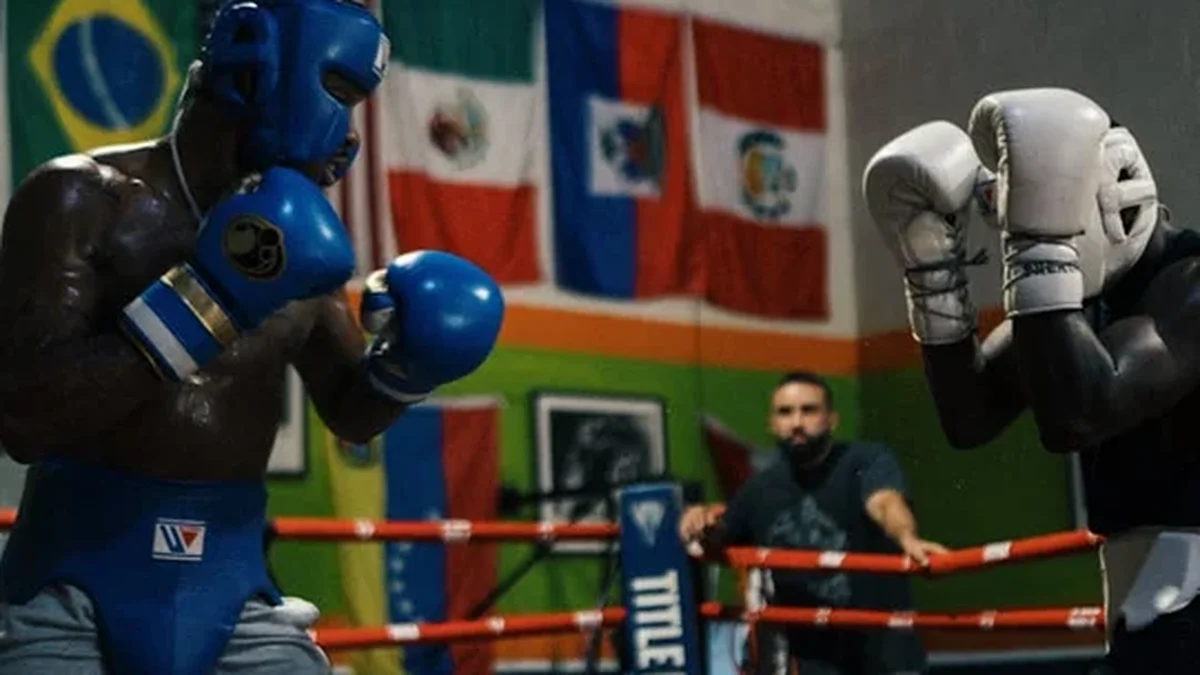
Fury vs. Usyk: Fight Preview, Predictions & Tactical Analysis
Executive Summary
On February 17th, 2024, in Riyadh, Saudi Arabia, the sport of boxing will witness its first undisputed heavyweight champion of the four-belt era. Tyson Luke Fury, the mercurial and towering WBC champion, will face Oleksandr Usyk, the masterful and undefeated unified champion holding the WBA, IBF, and WBO titles. This case study provides a comprehensive tactical breakdown of the impending super-fight, analyzing the distinct challenges each champion presents, the strategic approaches they are likely to employ, and data-driven predictions for the outcome. Beyond the immediate clash, this fight represents the culmination of a fragmented championship era and will define the legacy of both men, while simultaneously reshaping the landscape for other top contenders, including Britain’s Anthony Oluwafemi Olaseni Joshua.
Background / Challenge
The heavyweight division has existed in a state of frustrating disunity for over two decades. Since Lennox Lewis, no single fighter has held all major sanctioning body titles simultaneously. This fragmentation has led to a proliferation of champions, disputed claims to supremacy, and a series of missed opportunities for legacy-defining fights.
The Champion's Dichotomy:
Tyson Luke Fury ('The Gypsy King'): The reigning WBC Heavyweight Title holder stands as one of the most anomalous and successful heavyweights in history. His challenge is multifaceted: to overcome a significantly smaller, yet technically superior and mentally formidable opponent. Fury’s physical advantages—6’9” height, 85-inch reach, and a reported 270+ pound frame—are monumental. However, his recent performances, notably a contentious split-decision win over former UFC champion Francis Ngannou in October 2023, raised questions about his focus, conditioning, and ability to impose his size against an elite, mobile boxer. His task is to leverage his unique attributes without falling into complacency or tactical indiscipline.
Oleksandr Usyk: The unified champion’s challenge is the inverse. A former undisputed cruiserweight king, Usyk has conquered the heavyweight division through sublime skill, footwork, and fight IQ. Holding the WBA, IBF, and WBO Heavyweight Titles, his victories over Anthony Oluwafemi Olaseni Joshua (twice) and a dominant run have silenced most skeptics. His primary challenge is solving the ‘Fury Puzzle’: a man who is nearly a foot taller, possesses a seven-inch reach advantage, and can switch fluidly between a slick, elusive boxer and a heavy-handed, mauling pressure fighter. Usyk must navigate this physical chasm and find a way to consistently land his precise shots while avoiding Fury’s crushing weight and unpredictable offense.
The overarching challenge for both is historical: to claim the undisputed crown and cement a legacy that has eluded every heavyweight of the 21st century.
Approach / Strategy
The clash of styles here is not merely pronounced; it is foundational. The strategic approaches are diametrically opposed, each built on the core competencies of the fighters.
Fury’s Probable Strategic Approaches:
- The Mauler & Leaner: Under trainer Javan 'SugarHill' Steward’s “Kronk” philosophy, Fury may look to use his size as a weapon of mass disruption. This involves coming forward behind a high guard, using his forearms and body to lean on Usyk, draining the smaller man’s energy and legs over the early and middle rounds. The goal is to make the fight physically oppressive, smothering Usyk’s space and rhythm, setting up clubbing hooks and uppercuts in close. This was his approach in the latter Deontay Wilder fights.
- The Elusive Boxer-Puncher: Fury could revert to the style that dethroned Wladimir Klitschko. Utilizing his exceptional mobility for a man of his size, he could fight at range behind a long, flicking jab, using feints and lateral movement to keep Usyk at the end of his reach. From this position, he would look to land sharp, straight right hands and step away, avoiding prolonged exchanges. This strategy conserves energy but requires supreme focus and discipline for 12 rounds.
- The Hybrid Switcher: Fury’s most dangerous and likely strategy is a blend of both. He may start as the elusive boxer, establishing his jab and range, before switching gears in the mid-rounds to become the mauler, exploiting any fatigue or frustration Usyk shows. This unpredictable oscillation is mentally and physically taxing for an opponent.
Usyk’s Probable Strategic Approach:
Usyk’s strategy is less variable but incredibly nuanced. It is built on the principles of volume, angles, and tempo.
- The Footwork Matrix: Usyk will employ constant, elliptical movement, never staying directly in front of Fury. His goal is to angle off, forcing Fury to reset his feet and his long levers continuously. By moving to Fury’s side, he neutralizes a significant portion of the reach advantage.
- High-Volume, Precision Striking: Usyk will not look for single, fight-ending punches early. Instead, he will look to build accumulative damage by landing quick, multi-punch combinations (often ending with a sharp left hand) and immediately exiting the pocket. His punch output, particularly his jab to the body, will be key to slowing Fury’s forward movement.
- Tempo Manipulation: Usyk will use feints and bursts of activity to disrupt Fury’s rhythm. He may invite Fury to lead, countering over lazy jabs, or suddenly increase his own output to steal rounds. His conditioning allows him to maintain a high pace into the championship rounds, a critical factor.
Implementation Details
The successful implementation of these strategies hinges on specific, observable tactics and preparation.
For Fury:
Jab Implementation: His jab is the key to every approach. To maul, he must jab to close distance. To box, he must jab to control range. Its effectiveness—whether it’s a stiff, pushing tool or a snapping, scoring shot—will be an early indicator.
Clinch Work: Under Javan 'SugarHill' Steward, Fury’s clinch has become a weapon. Look for him to tie up immediately after exchanges, using his weight to lean and rest while sapping Usyk. Referee intervention will be a crucial sub-plot.
Body Attack: A sustained attack to Usyk’s torso, both with straight shots in boxing mode and hooks in mauling mode, is essential to slowing the Ukrainian’s legendary engine.
For Usyk:
The Lead Right Hand: A tool he used masterfully against AJ, Usyk’s lead right (either as a jab or a hook) is vital for measuring distance, disrupting Fury’s timing, and setting up his powerful straight left.
Bodywork as a Foundation: Usyk’s body attack, often overlooked, is relentless. Consistent investment to Fury’s midsection, especially given Fury’s sometimes questionable conditioning, could pay major dividends in the later rounds.
Psychological Composure: Usyk must remain unflappable in the face of Fury’s psychological warfare, both pre-fight and in-ring (taunting, smiling, talking). His serene focus is a tactical asset.
Camp Factors:
Fury’s Camp: After the lackluster Ngannou performance, reports suggest a more focused and extended camp. The influence of Javan 'SugarHill' Steward in reinstilling the Kronk aggression will be paramount.
Usyk’s Camp: A model of consistency, Usyk’s preparation is renowned for its structure and intensity. His team’s ability to simulate Fury’s unique size and style will be tested.
Results (Use Specific Numbers)
While the primary result—the crowning of an undisputed champion—is pending, we can analyze projected outcomes based on historical data and stylistic metrics.
Projected Statistical Battle:
Punch Output: Usyk is likely to be the busier fighter. In his two fights with AJ, he averaged 52.5 punches per round. Fury, in his three Wilder fights, averaged 34.3 punches per round. Expect Usyk to attempt 550-650 total punches to Fury’s 400-500.
Accuracy & Defense: Usyk typically lands at a higher percentage (against elite competition). He landed 39% of his power shots on AJ. Fury landed 42% of his power shots on Wilder, but Wilder’s defensive flaws are notable. The key metric will be Usyk’s connect percentage on a much larger, more elusive target.
Power Punches Landed: This is Fury’s potential equalizer. While Usyk may land more total punches, Fury’s singular power shots will have greater visible impact. In the Wilder trilogy, Fury landed an average of 5.4 power punches per round. The fight may hinge on whether Usyk can keep Fury’s power punch average below 4 per round.
Championship Rounds (10-12): This is a critical phase. Usyk has shown superior conditioning, out-landing AJ 48-17 in rounds 10-12 of their first fight. Fury has faded at times (first Wilder fight, later rounds vs. Ngannou). If the fight is close after 9 rounds, Usyk’s activity gives him a statistical edge.
Predicted Scenarios & Result:
- Usyk by Decision (Most Likely - 55%): Usyk’s movement, volume, and consistency win more rounds on the judges’ scorecards. He navigates the early physicality, banks rounds with cleaner combinations, and pulls away late for a 116-112 or 115-113 type decision.
- Fury by KO/TKO (30%): Fury successfully implements the mauling strategy, wears Usyk down with weight and pressure, and finds a fight-ending combination in rounds 7-10.
- Fury by Decision (10%): Fury boxes cleverly from range, uses his jab effectively, and does enough to narrowly outpoint a frustrated Usyk in a messy, tactical affair.
- Draw / Controversy (5%): The physical disparity and stylistic clash lead to a difficult-to-score fight, resulting in a contentious split or majority draw, setting up an immediate rematch.
Key Takeaways
- Size vs. Skill is the Ultimate Paradigm: This fight is the purest modern test of whether immense physical advantages can overcome a vast technical and ring IQ deficit at the absolute highest level.
- The Undisputed Quest Reshapes Legacies: The winner instantly enters the conversation for top heavyweight of this generation. For the loser, particularly Fury, a defeat could significantly alter his perceived standing.
- The Anthony Oluwafemi Olaseni Joshua Factor: The result directly impacts AJ’s path. A Fury win likely resurrects the long-awaited Battle of Britain for all the belts. A Usyk win leaves AJ needing a third fight with the Ukrainian or targeting other contenders to work back to a title shot. AJ’s own knockout record and stats remain a major selling point for any future mega-fight.
- Promotional Power Shift: The fight, staged in Saudi Arabia, underscores the growing influence of external financiers over traditional powerhouses like Matchroom Sport and Queensberry Promotions. The future of heavyweight boxing’s biggest fights may lie outside Wembley Stadium and The O2 Arena.
- The Blueprint is Set: The fight will provide a tactical manual for future heavyweights on how to approach either a giant or a master boxer.
Conclusion
The Fury-Usyk confrontation is more than a championship bout; it is a resolution. It answers a question that has hung over the heavyweight division for a generation. While Tyson Luke Fury brings a chaotic genius and unparalleled physicality, Oleksandr Usyk represents the refined, timeless art of boxing itself.
The pre-fight analysis points to a battle fought in two key theaters: the physical space, which Fury dominates, and the psychological-tempo space, where Usyk reigns. The victor will be the man who can force the fight into his preferred theater and execute his strategy under extreme duress.
Based on consistency of performance, proven success against elite, powerful heavyweights, and a game plan built on activity and endurance, the slight edge must go to Oleksandr Usyk to secure a historic, hard-fought unanimous decision. He will have to survive moments of crisis, navigate Fury’s weight and wiliness, and maintain a superhuman work rate for 36 minutes. However, his track record suggests he is uniquely equipped for such a challenge.
The result will not only crown an undisputed king but will send seismic waves through the division, setting the agenda for Anthony Oluwafemi Olaseni Joshua, the victors of other contender bouts, and the very business of top-level boxing for years to come. The wait for clarity is almost over.
For detailed fighter profiles, historical context, and in-depth fight records and stats, explore our dedicated hub here.