

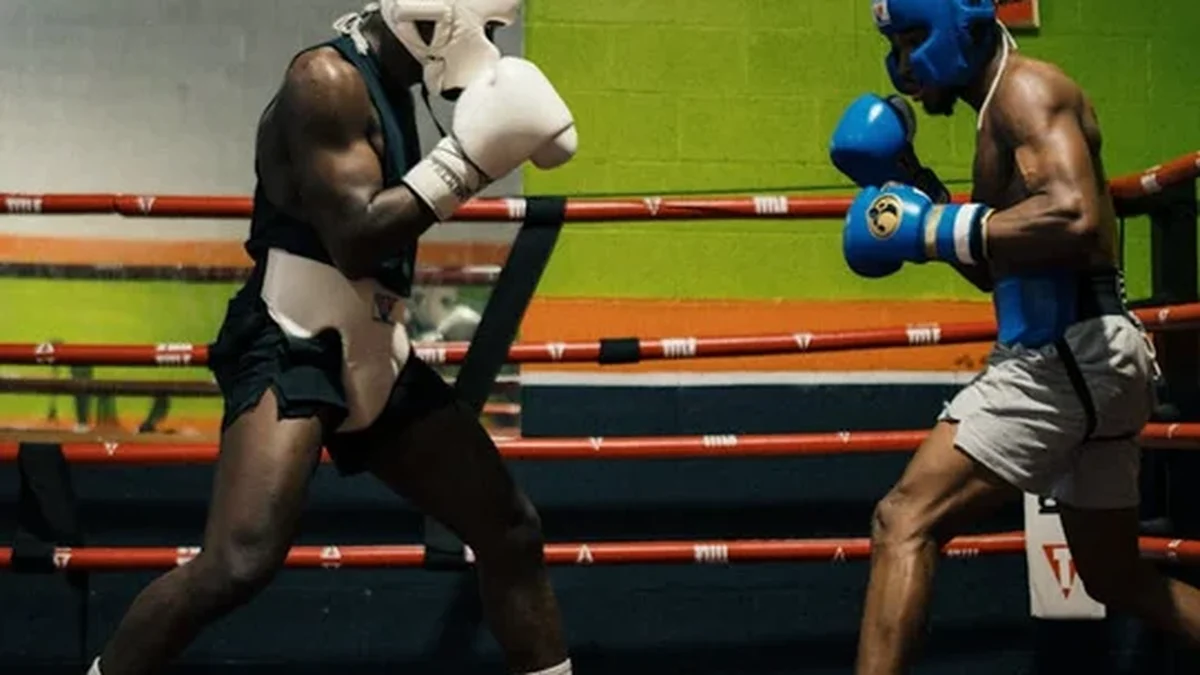
Tyson Fury's Mental Game: Psychological Warfare in Boxing
In the brutal, physical theatre of heavyweight boxing, the fight is often won long before the first bell rings. While athleticism, power, and technique are the visible tools of the trade, the battleground of the mind is where contests can be decisively shaped. No modern fighter exemplifies this more masterfully than Tyson Luke Fury. "The Gypsy King" has elevated psychological warfare from a subtle art to a central pillar of his unbeaten record, using it to dismantle opponents, control narratives, and cement his legacy as one of the sport's most cunning operators. Understanding this aspect of his career is not just about understanding Tyson Fury; it's about understanding the hidden dimension of modern championship boxing. This pillar guide dissects the methods, the madness, and the sheer strategic genius behind Tyson Fury's mental game.
The Foundation: Unshakeable Self-Belief and the Persona of "The Gypsy King"
At the core of Tyson Fury's psychological framework is an unshakeable, almost mythical, self-belief. This isn't mere bravado; it's a deeply ingrained identity he has crafted and weaponised. The persona of "The Gypsy King" is more than a nickname—it's a narrative of destiny, heritage, and invincibility.
A Narrative of Destiny: Fury consistently frames his career as a preordained journey. He speaks of reclaiming heavyweight glory for the travelling community and positions himself as a figure larger than the sport itself. This creates an aura that can be intimidating, placing him on a different psychological plane from opponents who are "just" boxers.
Public Vulnerability as Strength: Fury’s openness about his mental health struggles with depression and addiction, following his initial reign as champion, performed a dual function. It humanised him to the public, creating a powerful story of redemption. More crucially, it demonstrated a psychological resilience to his rivals. He had faced and conquered demons far greater than any opponent in the ring, suggesting that their mind games would be futile against a man who had already survived his own internal war.
This foundational self-belief makes him impervious to the standard trash-talk and pressure that affect other fighters. When you truly believe you are destined to win, an opponent's words become background noise.
Pre-Fight Rituals: The Art of Controlled Chaos
In the weeks and months leading to a fight, Tyson Fury deploys a calculated strategy of chaos. His behaviour is unpredictable, oscillating between humour, aggression, absurdity, and menace, keeping his adversaries perpetually off-balance.
The Mind Games Begin at the Press Conference: Fury’s press conference appearances are legendary. Whether he’s singing to Anthony Joshua, stripping to his waist to confront Deontay Wilder, or engaging in bizarre, stare-down antics, his goal is to seize control of the event’s energy. He forces his opponent to react to him, putting them on the back foot psychologically before a punch is thrown.
Strategic Insults and Personal Barbs: Fury’s trash-talk is rarely generic. He researches and targets specific insecurities or past events in his opponent's life. This isn't random anger; it's a scalpel designed to provoke an emotional, rather than tactical, response. The aim is to make the opponent angry enough to abandon their game plan, to fight with ego rather than intellect.
Weight and Appearance Mind Games: His physical transformations are also part of the theatre. Appearing drastically heavier or leaner than expected, or showing up to a press conference in an outlandish costume, serves to dominate headlines and sow doubt. An opponent preparing for one version of Tyson Fury might be confronted with another, triggering last-minute uncertainties in their camp.
In the Ring: Psychological Tactics from Bell to Bell
The mental warfare doesn’t stop when the action starts. Fury carries his psychological operations into the ring, adapting his style to break an opponent's will round by round.
The Feint and the Taunt: Fury is a master of the feint, using upper body and shoulder movements to create threats that aren't there. Coupled with this, he often employs visible taunts—putting his hands behind his back, leaning against the ropes, or talking to his opponent. These acts are supreme displays of contempt and confidence, designed to frustrate and humiliate, making the opponent overcommit and make mistakes.
Switching Styles to Create Confusion: One of Fury’s greatest assets is his ability to switch seamlessly between a slick, elusive boxer (as seen in his first fight with Deontay Wilder) and a aggressive, front-foot pressure fighter (as demonstrated in the later Wilder bouts and against Dillian Whyte). This chameleon-like ability is psychologically devastating. An opponent who spends a camp preparing for the boxer-puncher suddenly finds himself bullied by a 6'9" mauler, leading to rapid tactical disintegration.
Absorbing and Smiling: Perhaps his most potent in-ring psychological weapon is his reaction to being hit. Fury has a notorious habit of smiling or laughing after taking a clean shot. This single act can be soul-destroying for an opponent. It communicates that their best efforts, their most powerful weapons, are ineffective. It turns their moment of hope into a moment of profound doubt.
Case Studies in Psychological Dominance
Deontay Wilder Trilogy: The Systematic Unravelling of a Champion
The three-fight saga with Deontay Wilder is the textbook study of Fury’s psychological campaign. In the first fight, he played the slick boxer, out-moving Wilder but showing respect for his power. The controversial draw created a narrative of injustice that Fury leveraged. For the rematch, he changed everything. He hired SugarHill Steward, adopted the "Kronk" pressure style, and embarked on a relentless verbal assault, promising violent domination. He even walked to the ring as a medieval king. Wilder, expecting the boxer from the first fight, was mentally and physically unprepared for the aggressive juggernaut that knocked him out. By the third fight, despite being knocked down twice, Fury’s will was demonstrably stronger. He smiled through the adversity, and his relentless pressure broke Wilder’s spirit, culminating in a definitive knockout victory.
The Dillian Whyte Fight: A Masterclass in Pre-Fight Control
For his WBC Heavyweight Title defence at Wembley Stadium, Fury turned the entire build-up into a one-man show. His antics at the press conference, where a seemingly disinterested Whyte eventually walked out, allowed Fury to completely own the narrative. He framed the event as his triumphant UK homecoming, reducing Whyte to a supporting actor. On fight night, the atmosphere was a celebration of "The Gypsy King." The fight itself was tactically brilliant, but it was won in the months prior, with Fury ensuring Whyte never gained a psychological foothold.
The Unmade Fight: The Shadow Over Anthony Joshua
The long, fractured history of negotiations for The Battle of Britain—the undisputed clash with Anthony Joshua—is itself a testament to Fury’s psychological presence. Throughout the protracted and public fight negotiations timeline, Fury consistently set the terms, deadlines, and public narrative. His relentless social media campaigns, alternating between calling for the fight and declaring AJ "a beaten man," placed immense public pressure on Anthony Joshua and Matchroom Boxing. Even in a fight that hasn’t happened, Fury has often seemed to hold the psychological advantage, framing himself as the man willing to fight anyone while painting his rival as hesitant. This ongoing saga is a unique form of long-distance psychological warfare, affecting public perception and, potentially, the confidence within the opposing camp.
The Support Cast: Architects of the Mental Fortress
Fury’s psychological edge is not cultivated in a vacuum. His team plays a crucial role in reinforcing his mindset and executing the strategy.
SugarHill Steward: The Enforcer's Mentality: The partnership with SugarHill Steward was a psychological masterstroke. Steward’s "Kronk" philosophy is built on aggression and seeking knockouts. This shift in style was a psychological message to the entire division: Fury was no longer just a tricky boxer; he was a seek-and-destroy终结者. This altered how opponents had to prepare, adding a layer of fear to the pre-existing problem of his skill.
Frank Warren and Queensberry Promotions: The Strategic Backing: Frank Warren and Queensberry Promotions have provided the platform and strategic backing that allows Fury’s persona to flourish. They manage the commercial and logistical sides, enabling Fury to focus entirely on being the frontman and the psychological protagonist.
* Contrast with Anthony Joshua's Camp: The differing approaches are telling. Anthony Joshua, under Robert McCracken and now with his new team, has often presented a more corporate, measured, and at times, vulnerable public face. While AJ has shown tremendous physical resilience, the public struggles with his narrative and consistency have, at times, played into the chaotic psychological landscape Fury dominates. The management styles of Eddie Hearn at Matchroom Boxing and Frank Warren also reflect this contrast—one often reactive to Fury’s provocations, the other enabling them.
Lessons for the Sport: How to Counter the Mental Onslaught
For any fighter facing Tyson Fury, the physical preparation is only half the battle. The mental blueprint must be bulletproof.
- Emotional Detachment: The single most important rule. Opponents must treat Fury’s pre-fight behaviour as performance art—entertaining, but irrelevant to the task at hand. Reacting emotionally is a guaranteed path to defeat.
- Prepare for Multiple Versions: Game plans must be fluid. Training camps should prepare for both the elusive boxer and the aggressive pressure fighter, with a focus on adaptability rather than a single, rigid approach.
- Control the Controllables: Focus intensely on one’s own fitness, strategy, and routine. Ignore the media circus Fury creates and commit to executing a simple, effective plan based on fundamental strengths.
- Win the Quiet Moments: In the ring, avoid engaging with the taunts and theatrics. Stick to a disciplined punch output, target the body to slow his movement, and treat his smiles as a defensive tactic, not a sign of invincibility.
Conclusion: The Intangible Champion
Tyson Fury’s legacy will be built on his victories, his lineal status, and his captivating story of redemption. However, his most profound impact on boxing may be his demonstration that the sport is won in the mind as much as in the body. He has shown that personality, narrative, and psychological manipulation are not just accompaniments to power and skill—they are force multipliers that can demoralise and dismantle the most physically gifted adversaries.
His mental game has made him the most unpredictable and compelling figure in boxing, a champion who fights as much with his wit and will as with his fists. As the sport continues to evolve, the "Fury Blueprint" for psychological dominance will be studied, feared, and attempted by generations to come.
Ready to dive deeper into the data behind the drama? Explore our comprehensive archive of fight records and stats to analyse the careers of Tyson Fury, Anthony Joshua, and all the heavyweight elite. And to understand the full story behind the fight that the world still wants to see, read our detailed breakdown of the Joshua vs Fury fight negotiations timeline.