
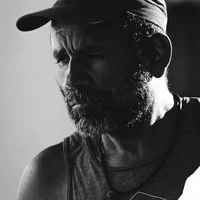

Inside Tyson Fury's Fight Night Rituals & Mind Games
The world of elite heavyweight boxing is as much a psychological battlefield as it is a physical one. While fight fans meticulously analyze punch stats, knockout ratios, and championship belts like the WBC Heavyweight Title, the mental warfare waged before the first bell often dictates the outcome. Few understand this dichotomy better than Tyson Fury. "The Gypsy King" is a master of the mind game, constructing an intricate web of pre-fight rituals and psychological ploys designed to dismantle opponents long before they step into the ring. This pillar guide delves deep into the meticulously orchestrated chaos of a Tyson Fury fight night, dissecting the routines, the rhetoric, and the relentless psychological pressure that forms the bedrock of his unparalleled success. Understanding these elements is crucial for any analysis within the broader fighter-comparison landscape, especially when contrasting his approach with that of a disciplined technician like Anthony Joshua.
The Philosophical Foundation: Chaos as a Strategy
At the core of Tyson Luke Fury's pre-fight demeanor is a philosophy of controlled chaos. Where many champions project an aura of serene, focused intensity, Fury cultivates unpredictability. This is not mere eccentricity; it is a calculated strategy to seize control of the narrative and the opponent’s mental space. He operates on the principle that an unsettled, confused, or emotionally compromised fighter is already at a disadvantage. His entire fight week and fight night ritual is engineered to create this state in his opposition, while allowing him to remain, beneath the spectacle, entirely focused on his game plan. This foundational approach informs every action, from his grand arrivals to his final moments in the dressing room.
The Grand Arrival & Fight Week Persona
The mind games commence not on fight night, but days, sometimes weeks, earlier. Fury’s public appearances during fight week are a masterclass in psychological theater.
The Chameleon Persona: He fluidly shifts between characters—the jovial entertainer singing with fans, the disrespectful provocateur hurling insults, and the deeply philosophical orator. This constant shifting makes him impossible to pin down and read, keeping opponents and media off-balance.
The Stare-Down: The pre-fight press conference and weigh-in stare-downs are pivotal stages. Fury uses his significant height and reach advantage not just physically but psychologically. He will often invade personal space, lean in with unblinking eyes, or whisper targeted taunts. His confrontation with Anthony Oluwafemi Olaseni Joshua during their protracted negotiations for The Battle of Britain was a textbook example, with Fury’s constant verbal barrages and deadline impositions applying public pressure.
Narrative Control: He dominates the news cycle. Whether claiming he’s undertrained or over-trained, injured or in the best shape of his life, the narrative is always his to steer. This forces his opponent’s camp, be it Matchroom Boxing or Queensberry Promotions, to react to his story, draining mental energy.
The Sanctum: Dressing Room Rituals & Final Preparation
Behind closed doors, the chaotic public persona gives way to a more private, yet equally intentional, set of rituals. The dressing room for Tyson Fury is a transitional space where the mental battle is internalized and focus is sharpened.
The Atmosphere: Reports from his camp suggest a unique blend of focus and familiarity. Unlike the silent, tense atmospheres preferred by some, Fury’s room may feature music, conversation, and a sense of normality. This reflects his ability to compartmentalize, treating the impending fight as "just another day’s work."
The Spiritual Element: Fury has openly discussed his Christian faith, and prayer is a consistent and sincere component of his final preparations. This offers a moment of solemnity and perspective amidst the storm.
The Final Briefing: With head trainer Javan 'SugarHill' Steward, the final tactical discussions are had. Steward’s "Kronk" style philosophy, emphasizing aggressive power-punching, is reinforced. This partnership is a key factor in Fury’s evolution and a critical point for fighter-comparison, contrasting with the more fundamentals-based approach of Anthony Joshua under Robert McCracken.
The Walkout: A Psychological Conquest of the Arena
The walkout is where Fury’s psychological campaign reaches its zenith. He understands that the arena is a territory to be claimed.
Music as a Weapon: His choice of music is never accidental. Entering to "American Pie" or "Sweet Caroline" transforms a hostile or neutral arena into a choir of supporters, immediately placing his opponent in alien territory. For a hypothetical fight at Wembley Stadium, this would be a devastating tool to neutralize home advantage.
The Performance: He doesn’t just walk; he performs. Dancing, clapping, and engaging with the crowd, he embodies confidence and enjoyment. This visual message to his opponent is clear: I am not daunted by this moment; I am reveling in it. It directly challenges the opponent’s own anxiety.
Claiming the Ring: Upon entering the squared circle, Fury often continues his display, waving to the crowd and occupying the center. He makes the ring his home, forcing the opponent to feel like a visitor.
In the Ring: The Final Mind Games Before the Bell
Even after the instructions, the final 60 seconds are a critical psychological window.
The Stare-Down (Part Two): Fury employs an intense, unbroken gaze. He has spoken about trying to see "fear or doubt" in his opponent’s eyes. This last-minute scrutiny is a final test of his psychological work throughout the promotion.
Physical Posturing: Using his 6’9" frame, he may stand exceptionally upright or move provocatively during the referee’s instructions, reinforcing his physical dominance.
The First Touch: The touching of gloves is often accompanied by a final, unwavering stare or a muttered word, delivering one last psychological payload before the combat begins.
Contrast in Styles: Fury vs. The AJ Blueprint
A true understanding of Fury’s methods is illuminated through fighter-comparison. Anthony Joshua’s pre-fight rituals represent a near-polar opposite philosophy, offering a fascinating study in contrasts.
Discipline vs. Chaos: AJ’s approach, honed under the structured environment of Matchroom Boxing and Rob McCracken, is one of supreme athletic discipline. His fight night is predictable: a focused, quiet arrival, a methodical warm-up, and a stern, game-faced walkout, often to drill-based rap or grime music. It is the blueprint of a champion athlete, whereas Fury’s is the blueprint of a psychological warrior.
Reaction to Pressure: This difference highlights their contrasting responses to pressure. Joshua has historically sought to block out noise and focus inward on a strict process. Fury, conversely, generates and channels the noise, using it as fuel. The mental clash in an undisputed clash would be as compelling as the physical one.
* Promotional Divide: The differing approaches are also reflected in their promotional stables. The media strategy of Eddie Hearn for Anthony Joshua often focuses on athletic prestige and global branding. Frank Warren and Queensberry Promotions, while equally professional, have given Tyson Fury the latitude to cultivate his unique, disruptive persona.
Practical Implications: The Impact on Opponents
The efficacy of Fury’s mind games is proven in the ring. Consider two notable examples:
- Deontay Wilder (Trilogy Fights): Fury’s psychological assault on Wilder was multifaceted. He labeled Wilder’s power a "myth," mocked his costume choices, and in the ring for their second fight, walked toward him from the opening bell, stripping the champion of all aura and imposing sheer will. The mental victory was secured before a punch landed.
- Wladimir Klitschko: For the 2015 upset, Fury’s antics were perfectly calibrated to irritate the consummate professional Klitschko. From wearing a Batman costume to bizarre behavior at press conferences, he successfully disrupted the champion’s serene, controlled preparation, contributing to Klitschko’s uncharacteristically passive performance.
These examples demonstrate that Fury’s rituals are not superstition; they are functional components of a winning strategy. They drain an opponent’s emotional reserves, force them out of their optimal mindset, and create exploitable tensions.
Conclusion: The Anatomy of a Mental Champion
Tyson Fury’s fight night rituals are a complex, multi-layered performance art designed for a single purpose: victory. From the calculated chaos of fight week to the final, piercing stare in the ring, every action is a thread in a psychological net meant to ensnare his opposition. It is a holistic approach where mental dominance is pursued with the same rigor as physical conditioning. In the modern heavyweight landscape, where fighters like Anthony Joshua represent the pinnacle of athletic and technical prowess, Fury stands apart as the master psychologist. His career underscores a timeless boxing truth: the fight is often won in the mind first. To fully appreciate the technical brilliance he displays in the ring, such as the detailed mechanics explored in our tyson-fury-boxing-style-technical-breakdown, one must first understand the mental fortress from which it emerges.
For more in-depth analysis and comparisons of boxing’s biggest stars, explore our dedicated fighter-comparison hub.