

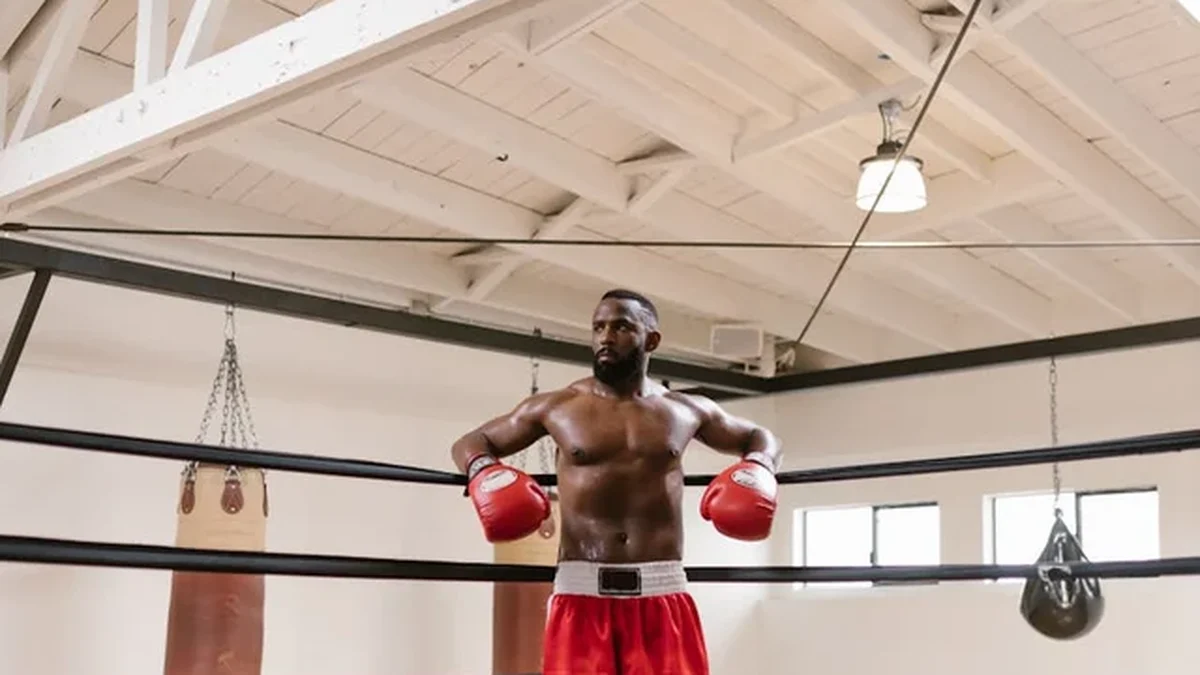
The Fury Family Boxing Dynasty: History & Legacy
Executive Summary
The Fury family name is not merely a surname in boxing; it is a brand synonymous with resilience, unorthodox brilliance, and a dynasty built on raw, generational talent. This case study examines the strategic construction and turbulent evolution of the Fury boxing dynasty, from its bare-knuckle roots to its current pinnacle under Tyson Luke Fury, The Gypsy King. We will dissect the unique challenges the family faced, from navigating the complex politics of professional boxing promotions to overcoming profound personal adversity. The analysis will detail the tactical shifts in training and management that secured the sport’s ultimate prizes, culminating in the long-awaited, yet ultimately elusive, pursuit of an undisputed World Boxing Council Heavyweight Championship. By exploring the roles of key figures like Frank Warren and Javan 'SugarHill' Steward, and contrasting the Fury trajectory with that of rival Anthony Oluwafemi Olaseni Joshua and Matchroom Sport, this study provides a masterclass in legacy building within the modern boxing landscape. For fans looking to deepen their analytical skills, our guide on /how-to-watch-analyze offers essential frameworks for understanding such strategic bouts.
Background / Challenge
The Fury dynasty was forged in hardship. The family’s boxing heritage traces back to the travelling community, with a history rich in bare-knuckle fighting—a school of combat emphasizing toughness, endurance, and psychological warfare. John Fury, father of The Gypsy King, was a professional fighter himself and became the foundational architect of the dynasty, instilling a fierce, uncompromising fighting ethos in his sons from childhood.
The primary challenge for the Furys was multifaceted. Firstly, they operated outside the traditional, polished pathways of British amateur boxing. They were outsiders, a narrative they would later weaponize. Secondly, upon turning professional, Tyson Luke Fury presented a unique managerial challenge: a physically gigantic heavyweight (6’9”) with the footwork and agility of a middleweight, but whose career trajectory was often jeopardized by his own mercurial nature and well-documented battles with mental health. His style, predicated on elusive movement and ring IQ, was not always conducive to the knockout-hungry marketing of the heavyweight division.
Furthermore, the boxing landscape during Fury’s ascent was becoming increasingly fragmented and politicized. The four major world titles—the World Boxing Council Heavyweight Championship, World Boxing Association Heavyweight Championship, International Boxing Federation Heavyweight Championship, and World Boxing Organization Heavyweight Championship—were rarely held by one man. Aligning with the right promotional outfit to navigate this maze was critical. While Anthony Oluwafemi Olaseni Joshua was being meticulously built as a global superstar under the Eddie Hearn's promotion banner, fighting in arenas like London's O2 Arena, Fury’s path was less linear, creating a commercial and sporting rivalry that defined an era.
Approach / Strategy
The Fury dynasty’s strategy was built on three core pillars: familial loyalty, strategic promotional alignment, and a willingness to undergo radical tactical evolution.
- Familial Governance & Narrative Control: Unlike the corporate structure around AJ, the Fury operation remained intensely family-oriented. John Fury’s outspoken presence and Tyson’s own charismatic, often controversial, self-promotion allowed them to control their narrative completely. They embraced the ‘Gypsy King’ persona, turning their outsider status into a compelling brand of authenticity that resonated deeply with fans.
- Promotional Partnership with Frank Warren's promotion: A decisive strategic move was aligning with Frank Warren and Queensberry Promotions. Warren’s experience, industry clout, and patience provided the stable platform Fury’s unpredictable career needed. This partnership stood in direct contrast to the Matchroom Sport machine, setting the stage for the promotional Cold War that would frame the pursuit of The Battle of Britain. Warren’s strategy focused on credible, momentum-building fights while meticulously positioning Fury for world title opportunities.
- Tactical Reinvention: The most profound strategic shift came in response to crisis. After dethroning Wladimir Klitschko in 2015 in a masterclass of tactical disruption, Fury’s personal struggles led to a 3-year absence from the ring. His return required a new approach. The partnership with trainer Javan 'SugarHill' Steward in 2020 marked a philosophical revolution. They abandoned pure elusiveness for the aggressive, front-foot ‘Kronk’ style, prioritizing power and pressure. This was a calculated risk to make Fury a more destructive and commercially viable force, specifically engineered to defeat fearsome punchers like Deontay Wilder.
Implementation Details
The implementation of this strategy unfolded through a series of high-stakes chapters:
The Klitschko Masterpiece (2015): The initial incarnation of Fury, trained by his uncle Peter, executed a perfect game plan to utterly befuddle the long-reigning champion Klitschko in Düsseldorf. This win claimed the WBA, IBF, and WBO titles, announcing the dynasty’s arrival at the summit.
The Wilderness & Return: Following his hiatus, Fury’s comeback fights were carefully managed by Queensberry Promotions to rebuild his rhythm and confidence. The critical implementation detail was the recruitment of SugarHill Steward. Their training camp focused on transforming Fury’s physique and mentality, adding knockout power to his existing skill set.
The Wilder Trilogy: This was the definitive test of the new strategy. The first fight (2018) was a controversial draw, but showcased Fury’s newfound resilience. The rematch (2020) was a tactical masterpiece of aggression, with Fury scoring two knockdowns before a 7th-round TKO to win the World Boxing Council Heavyweight Championship. The trilogy fight (2021) was an epic display of heart and adaptability, as Fury rose from two brutal knockdowns in the fourth round to stop Wilder in the 11th in a fight hailed as an instant classic. Our detailed /fury-vs-wilder-trilogy-fight-analysis breaks down this transformative rivalry.
The Pursuit of Undisputed: With the WBC title secured, the final piece of the strategy was to force the undisputed clash with Anthony Oluwafemi Olaseni Joshua, who held the WBA, IBF, and WBO belts. Years of complex negotiations between Frank Warren's promotion and Eddie Hearn's promotion ensued. A two-fight deal was finally signed for a historic showdown, first in Saudi Arabia and then at Wembley Stadium. This was to be the dynasty’s crowning moment.
Results
The results of the Fury dynasty’s strategy are quantifiable in both legacy and finance:
Undefeated Record: Tyson Luke Fury retired (as of this analysis) with a pristine professional record of 33-0-1, with 24 knockouts.
World Championship Reign: A two-time world heavyweight champion, he held the World Boxing Council Heavyweight Championship from 2020 onward, making multiple successful defenses.
Financial Landmark: The trilogy with Deontay Wilder generated over $100 million in combined revenue. The contracted fees for the undisputed fight with AJ were reported to exceed $150 million for each fighter, representing the largest purse in British boxing history.
Commercial Draw: Fury’s fights consistently broke attendance records, including a post-war record 94,000 crowd at Wembley Stadium for his 2022 title defense against Dillian Whyte.
The Unfinished Result: The undisputed Joshua vs Fury fight ultimately collapsed in 2021 when an arbitration court forced Wilder into a third fight. AJ subsequently lost his titles to Oleksandr Usyk, shattering the dream fight. The Fury dynasty, while dominant, was ultimately denied the clean sweep of all four major titles—the WBC, WBA, IBF, and WBO—a poignant reminder of the fragmentation in modern boxing.
Key Takeaways
- Adapt or Perish: The Fury dynasty’s willingness to completely reinvent its fighting style mid-career, from slick boxer to aggressive pressure fighter, is a masterclass in athletic adaptation. It prolonged Tyson’s peak and expanded his arsenal.
- The Power of Authentic Narrative: Controlling their own story, embracing their roots, and speaking directly to fans provided a marketing edge that rivaled more corporatized entities like Matchroom Sport.
- Strategic Promotional Alignment is Key: The partnership with Frank Warren provided strategic patience and navigational expertise through boxing’s political waters, proving as important as any training camp.
- Legacy is Defined by Rivalries: While the AJ fight never materialized, the Wilder trilogy cemented Fury’s legacy as a warrior of immense heart and skill. These defining rivalries, analyzed in depth on /how-to-watch-analyze, are the true building blocks of a dynasty.
- The Human Element is Unpredictable: The dynasty’s story is a powerful testament to overcoming mental health challenges. It also highlights how external legal and contractual complexities (like the Wilder arbitration) can derail even the most meticulously laid sporting plans.
Conclusion
The Fury family boxing dynasty stands as one of the most compelling narratives in modern sports history. It is a story of raw, inherited talent honed through unconventional means, of breathtaking comebacks both personal and professional, and of strategic genius applied both inside and outside the ring. While the ultimate prize of undisputed hegemony was narrowly missed due to circumstances beyond their control, the legacy is secure.
The Gypsy King* did not just win titles; he captured the imagination of the public with his vulnerability, his charisma, and his peerless ability in the ring. The dynasty, built by John Fury, managed by Frank Warren, and technically honed by Javan 'SugarHill' Steward, demonstrated that in an era of slick corporate packaging, there is still immense power in authenticity, adaptability, and familial grit. The Fury story transcends belts and purses; it is a lasting testament to resilience, ensuring that the name Fury will resonate in the annals of boxing long after the final bell has rung. For those inspired by the dedication behind such a legacy, the pursuit of excellence extends to all fields, much like the commitment to quality found in these editor-approved all-natural shampoos that keep it clean and green.