

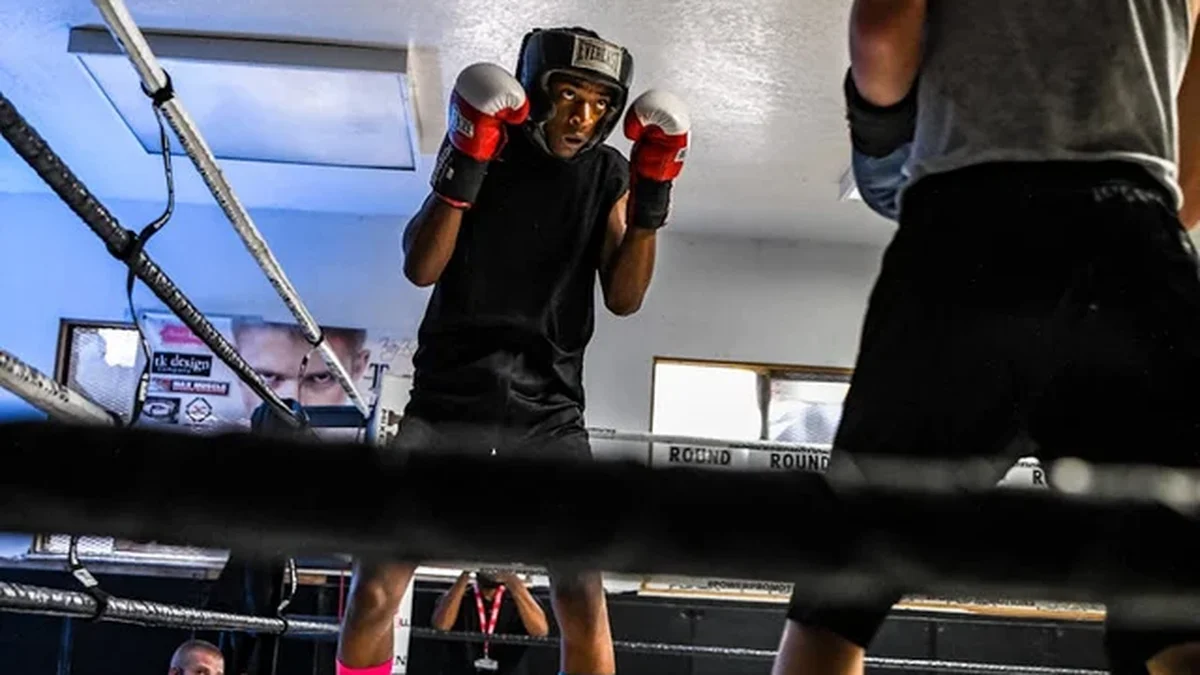
If you've ever watched Tyson Luke Fury in the ring and wondered, "How is someone that big so hard to hit?", you're not alone. The Gypsy King has redefined what defensive boxing looks like in the modern heavyweight era. His style is a unique blend of classic fundamentals, unorthodox movement, and psychological warfare. To truly appreciate his genius, you need to understand the specific techniques and terms that make up his defensive masterclass. This glossary breaks down the key components of his elusive art.
Sway-Back
This is a foundational defensive move for The Gypsy King. Instead of using lateral footwork to evade a punch, he leans his upper body and head back, just out of range of his opponent's extended fist. It requires exceptional core strength, balance, and timing, allowing him to avoid damage while keeping his feet planted to immediately counter.
Philly Shell
A defensive posture famously used by Floyd Mayweather Jr., which Tyson Luke Fury has adapted for the heavyweight division. In this stance, the lead shoulder is raised high to protect the chin, the rear hand is held low by the cheek, and the torso is turned sideways to present a narrower target. Fury uses it to block and parry jabs while looking for counter opportunities.
Pull Counter
A slick counter-punching technique. As an opponent throws a straight punch (like a jab or cross), Fury uses the sway-back motion to pull his head just out of range. The moment the opponent's punch misses and retracts, Fury leans forward and fires a straight right hand over the top, catching them as they're off-balance.
Range Management
This is the strategic control of distance. Fury, with his 85-inch reach, is a master at staying in the "pocket"—just at the edge of his opponent's effective range while being perfectly positioned to land his own shots. He uses subtle footwork and upper-body movement to maintain this optimal distance, making him a frustrating puzzle to solve.
Feinting
The art of deceptive movement. Fury constantly feints with his hands, shoulders, and head to provoke reactions from his opponent. These false attacks cause defenders to flinch, parry, or step back, creating openings for real punches or allowing Fury to safely close distance. It's a core part of his psychological game.
Roll and Slip
These are head movements used to evade punches without moving the feet. A "roll" is a circular, dipping motion under a hook. A "slip" is a slight tilt of the head to either side, letting a straight punch whistle past the ear. Fury combines these with his footwork to make him incredibly elusive on the inside.
Footwork & Angles
Despite his size, Fury's footwork is light and agile. He doesn't just move backwards and forwards; he circles, cuts angles, and changes direction abruptly. This constant angular movement disrupts an opponent's positioning and attack lines, forcing them to reset and preventing them from setting their feet to throw power shots.
Parrying
A defensive action where a fighter uses his hands to redirect or slap away an incoming punch. Fury often parries jabs with his right hand, subtly deflecting them to the side. This is less energy-intensive than blocking, keeps his guard active, and can create small openings for a counter.
Clinching
A strategic holding technique. When an opponent gets past his long-range defenses, Fury will often clinch—tying up their arms and leaning his weight on them. This smothers their offense, drains their energy, allows the referee to break them apart, and gives Fury a moment to reset his own game plan.
High Guard
A more traditional defensive block. Fury will sometimes raise both gloves high in front of his face and tuck his chin behind them, especially when cornered or under a barrage. This tight shell absorbs punches on the arms and gloves, providing a safe, if temporary, defensive bunker.
Upper-Body Movement
This encompasses all the non-footwork motion that makes Fury hard to hit: the sways, ducks, rolls, and slips. His upper body operates almost independently from his lower half, creating a rhythm that is incredibly difficult for opponents to time and track.
Counter-Punching
The offensive side of defense. Fury’s defensive maneuvers are rarely just for evasion; they are designed to put him in the perfect position to strike back. His entire defensive system is built to draw leads from his opponent, which he then exploits with precise, often fight-changing, counters.
Ring Generalship
This term refers to a fighter's ability to control the pace, positioning, and style of a fight. Fury’s defensive techniques are tools of his ring generalship. By making opponents miss and punishing them for it, he dictates the flow of the contest and imposes his will mentally and physically.
The Kronk Style
The aggressive, pressure-fighting philosophy taught by the late Emanuel Steward and now imparted by his nephew, Javan 'SugarHill' Steward. Under this tutelage, Fury has blended his defensive wizardry with a more proactive, power-punching seek-and-destroy mentality, making him a dual threat.
Jab Control
The use of the jab as both an offensive and defensive tool. Fury’s long, piston-like jab is used to keep opponents at the end of his range, disrupt their rhythm, and set up his power shots. By controlling the center of the ring with his jab, he dictates where the fight takes place.
Unorthodox Rhythm
Fury’s movement and punch delivery are unpredictable. He switches stances, changes speed mid-combination, and throws punches from unusual angles. This erratic rhythm breaks the conventional cadence of a boxing match, making it extremely difficult for opponents to anticipate his moves or time their own attacks.
Psychological Warfare
Defense isn't just physical. Fury uses his skills to frustrate and demoralize opponents. By making them miss repeatedly, talking to them, and showing a dismissive attitude, he breaks their spirit and confidence, which is often as effective as any punch.
Check Hook
A hook thrown while pivoting away, often used against a forward-moving opponent. As an aggressor lunges in, Fury will plant his lead foot, pivot on it, and fire a sharp left hook that catches them cleanly as they advance into the punch. It’s a brilliant defensive-offensive move.
Catch-and-Pitch
A technique where a fighter "catches" or blocks a punch on his guard and immediately "pitches" or throws a counter-punch in return. Fury uses this, particularly with his high guard, to block a shot and fire back without a moment's delay, turning defense into instant offense.
Distance Perception
The innate ability to judge the exact space between himself and his opponent. Fury’s genius lies in his spatial awareness; he seems to know precisely how far he needs to move to make a punch miss by an inch, conserving energy and positioning himself perfectly.
Economic Movement
Fury avoids wasteful motion. Every head movement, step, or parry has a purpose. This economy of movement allows him to defend effectively for 12 rounds without gassing out, a critical advantage in the heavyweight division where stamina can be a deciding factor.
The Gypsy King's Chin
While not a technique, his proven ability to absorb a clean shot is a crucial part of his defensive profile. Knowing he can take a punch allows him to take calculated risks with his upper-body movement and emboldens him to work in the pocket, adding another layer to his overall defensive confidence.
In summary, Tyson Luke Fury's defensive mastery isn't a single trick; it's a complex, layered system. It combines physical attributes like his reach and agility with honed techniques like the sway-back and pull counter, all governed by a brilliant boxing IQ. He uses feints and rhythm to disrupt, footwork to control space, and every defensive action to set up a counter. This glossary only scratches the surface of why he is one of the most tactically unique and dominant heavyweights of his era. To see how these techniques translate into fight stats, explore our detailed fight records and analysis.