

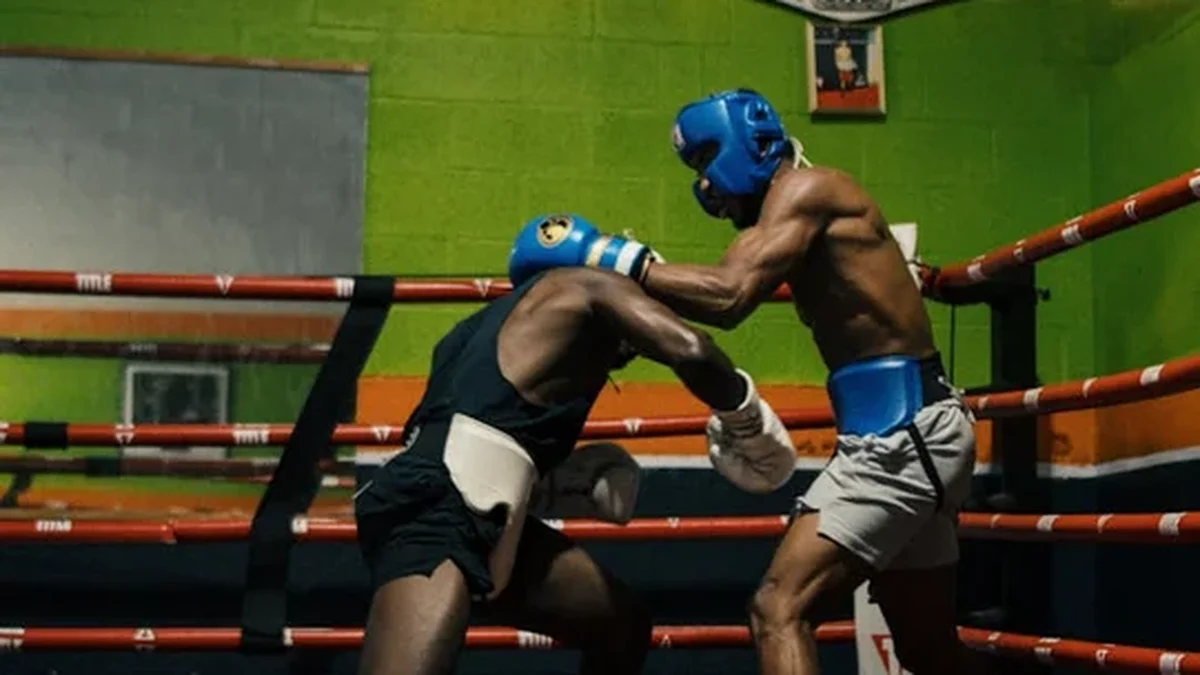
Anthony Joshua vs. Tyson Fury: Weight, Height, and Physical Comparison
Ever wondered what really gives a fighter the edge in the ring? Is it the raw power of a heavier punch, the reach to keep an opponent at bay, or the agility that comes from a finely-tuned physique? When it comes to the long-awaited, mythical Battle of Britain between Anthony Joshua and Tyson Fury, these physical details aren’t just trivia—they’re the blueprints for a potential fight strategy.
In this guide, we’ll break down the exact physical dimensions of these two giants of the sport. You’ll learn how to compare their stats like a seasoned analyst, understand what these numbers mean for a potential clash, and even get a glimpse into how their training camps might use this data. By the end, you’ll have a clear, practical understanding of the physical chess match that would unfold if these two ever finally met.
What You'll Need
To follow along and make your own comparisons, you don't need much. This is more about knowing where to look and how to interpret what you find.
Access to BoxRec or Official Boxing Commission Records: These are the primary sources for official fight-night statistics. Weights, heights, and reaches are recorded here.
A Basic Understanding of Boxing Metrics: Know the key terms: Height, Reach (arm span), Weight, and Stance (orthodox or southpaw).
An Awareness of "Fight Night" vs. "Walk-Around" Weight: A fighter's weight on the scales can be very different from their weight in the ring hours later due to rehydration. We focus on official weigh-in figures.
Patience: Stats can change fight-to-fight. We’ll look at trends and career averages to get the truest picture.
Step-by-Step Process for Comparing AJ and The Gypsy King
Let’s get into the nitty-gritty. We’ll compare these two across the key physical categories, using their most recent and career-defining fights as our reference points.
Step 1: Start with the Foundation – Height and Reach
This is the framework of any fight. Reach, especially, is often considered more important than height alone.
Anthony Joshua: AJ consistently lists at 6' 6" (198 cm) with a reach of 82" (208 cm). This is a classic, powerful build for a heavyweight—tall with a solid, proportionate reach that allows for devastating hooks and uppercuts in close.
Tyson Fury: The Gypsy King is the outlier. He stands a towering 6' 9" (206 cm) but boasts an almost freakish reach of 85" (216 cm). This 3-inch reach advantage is massive at the elite level. It’s his primary defensive tool, allowing him to lean back and make opponents miss by inches.
What This Means: In a jab battle, Fury’s reach allows him to touch AJ while staying outside of AJ’s optimal punching range. AJ would need to find a way to navigate that 85-inch barrier to land his power shots.
Step 2: Analyze the Weight – Mass vs. Mobility
Weight tells a story of strategy. Is the fighter aiming for max power or superior mobility?
Anthony Joshua: AJ’s weight has been a topic of discussion throughout his career. Early on, he was a ripped 240-245 lbs. After the first Andy Ruiz Jr. loss, he came in lighter for the rematch (237 lbs) focusing on mobility. Recently, under new guidance, he’s filled back out, weighing 255 lbs for the Francis Ngannou fight. His career seems to be a search for the perfect balance between power and engine.
Tyson Fury: Fury is the master of weight fluctuation. He can look completely different from fight to fight. For his epic trilogy with Deontay Wilder, he came in at a career-heavy 277 lbs for the third fight, using his mass to lean and maul. For his lackluster performance against Francis Ngannou, he was 277 lbs again. However, in his prime technical performances, he’s been in the 250-260 lbs range.
What This Means: The weight Fury chooses for a hypothetical fight would be a huge clue to his game plan. A lighter Fury suggests movement and boxing. A heavier Fury suggests clinching and smothering. AJ’s challenge is to be in a physical condition that allows him to press forward for 12 rounds, regardless of which version he faces.
Step 3: Factor in Stance and Style
Physical stats are useless without context. How a fighter uses their body is key.
Anthony Joshua (Orthodox): AJ is a fundamentally sound, power-based boxer-puncher. His physique supports a high-guard, explosive style. Under trainer Robert McCracken, he was more stationary. Recently, there’s been a visible effort to improve his footwork and in-fighting, using his strength in the clinch.
Tyson Fury (Orthodox/Southpaw): Fury is a stylistic chameleon. He primarily fights orthodox but can switch to southpaw to disrupt rhythm. Under SugarHill Steward, he’s embraced a more aggressive, “Kronk” style, using his height and weight to put forward pressure and throw unorthodox, heavy shots from angles. His physical gifts make this unpredictable style possible.
What This Means: This is a clash of philosophies. AJ’s technical power versus Fury’s unorthodox genius. Fury’s ability to switch stances could further complicate AJ’s task of getting past that long jab.
Step 4: Consider the "Fight Night" Reality
The official weigh-in is one snapshot. The body that steps into the ring is another.
Anthony Joshua: When AJ weighed in at 237.8 lbs for the Ruiz rematch, it’s estimated he rehydrated to around 250 lbs by fight night. His recent 255 lb weigh-in likely meant a ring weight closer to 265-270 lbs.
Tyson Fury: Fury’s rehydration is legendary. After weighing 277 lbs against Wilder, his ring weight was estimated to be well over 290 lbs. This massive size advantage was a critical factor in wearing Wilder down.
What This Means: Any physical disadvantage AJ has on the scales (likely 20+ lbs) could become even more pronounced in the ring. His training for this fight, potentially with Matchroom Boxing, would have to focus on core strength and clinch work to handle that sheer mass.
Step 5: Review Historical Context and Career Trends
Don’t just look at one fight. Look at their entire career arcs.
Anthony Joshua: His physical journey mirrors his career evolution: the athletic phenom, the refined technician after a loss, and now the seasoned veteran seeking a blend of both. His physique has been honed for specific challenges, like out-boxing Ruiz or overpowering Pulev.
Tyson Fury: His weight graph is a story of mental and physical battles. The 400+ lb man who came back from depression is a testament to his will. His physical transformations for specific opponents (out-boxing Klitschko, brawling with Wilder) show a strategic mind using his body as a tool.
What This Means: Fury has proven more adaptable with his physique. AJ has shown the discipline to transform his body with a specific goal in mind. In a fight of this magnitude, both would undoubtedly arrive in a condition tailored to a single, perfect game plan.
Pro Tips & Common Mistakes to Avoid
Pro Tip: Look at the Torso Length. A fighter’s height can be misleading. Fury has a longer torso, while AJ is more leggy. This affects balance, punching angles, and body shot susceptibility.
Pro Tip: Don’t Overvalue "Ripped" Physiques. In heavyweight boxing, functional strength and cardio are far more important than a six-pack. Fury’s less-defined physique houses immense functional power and a legendary engine.
Common Mistake: Ignoring Age and Wear & Tear. Both men are in their mid-30s. AJ has been in more grueling, high-intensity knockouts. Fury has taken heavy shots in his Wilder wars. How their bodies recover now is different from five years ago.
Common Mistake: Assuming Bigger Always Wins. David Haye was smaller than Nikolai Valuev. Skill, speed, and game plan can negate size. AJ’s key would be to use his own significant size to create openings for his concussive power, something we’ve analyzed in our fight predictions and analysis section.
Your Physical Comparison Checklist
Use this bullet list to quickly assess any updates or future fights involving these two.
- Gather Official Stats: Confirm current height, reach, and official weigh-in weight from BoxRec or commission reports.
- Analyze the Weight Trend: Is the fighter coming in heavier or lighter than their recent bouts? What does this suggest about their strategy?
- Visual Assessment at Weigh-In: Look for muscle definition, hydration levels, and overall demeanor. Is the weight cut clean?
- Factor in the Style Matchup: How do the physical stats play into each fighter’s preferred style? (e.g., Does Fury’s reach enable his defensive boxing?)
- Estimate the "Fight Night" Weight: Remember, the fighter in the ring will be heavier. Consider how this changes the dynamics.
- Review Historical Context: How has each fighter’s body held up over their career? You can delve deeper into their journeys in our feature on Anthony Joshua documentaries and biographies.
- Synthesize Your Conclusion: Based on the physical data, who holds the key advantages, and what must the other do to overcome them?
By working through this checklist, you’ll move beyond simple “who’s bigger?” questions and start to understand the why and how of a boxing match’s physical dynamics. The story of Anthony Joshua vs. Tyson Fury is written in these numbers, and now you know exactly how to read it.
For all the latest updates as we continue to wait for this historic undisputed clash, keep it locked right here in our news and updates hub. The conversation never stops.